
Visual Sensory Activities for Early Childhood Learning
Have you noticed how your child’s eyes focus when watching bubbles float or following a moving toy? These moments are important for visual sensory development.
Visual sensory activities help your child’s brain learn to process visual information, which is essential during the first five years of life. If you want to support your child’s attention, coordination, and emotional regulation, understanding and using visual sensory play is a good place to start.
What Are Visual Sensory Activities?
Your child’s sense of sight plays a major role in how they learn. Simple tasks like watching a mobile or sorting colourful blocks help develop focus, coordination, problem-solving, and emotional regulation.
Visual sensory activities are not just enjoyable – they support essential developmental skills.
Definition and Overview
Visual sensory activities are experiences that stimulate your child’s sense of sight. These include observing, tracking, and reacting to visual input like colour, shape, light, and motion.
Examples include watching a spinning mobile, following a rolling ball, or sorting coloured blocks. The ability to recall these images so readily is because of your child’s visual processing system. These activities engage the brain and eyes to work together, helping your child make sense of their environment.
Children naturally focus on and respond to visual information by tracking movement, noticing changes in shape or colour, and directing their gaze. This strengthens their ability to interpret visual cues, an essential skill for everyday learning.
How Vision Impacts Development
Vision influences many areas of a child’s development. Engaging in visual sensory play supports fine motor development, by strengthening the small muscles needed for tasks like drawing and grasping.
It also improves visual tracking – the ability to follow moving objects smoothly – which helps build focus and prepares children for reading.
Visual sensory input also supports cognitive skills such as pattern recognition, memory, and early problem-solving. It plays a role in emotional regulation by helping children calm down through predictable and gentle visual input. For example, watching slow-moving lights or glitter jars can help soothe a child and support emotional balance.
Benefits of Visual Sensory Play for Young Children
Everyday play can support your child’s learning and development. Visual sensory activities help children improve coordination, attention, problem-solving, and early thinking skills while also supporting emotional regulation.
Cognitive and Motor Skill Development
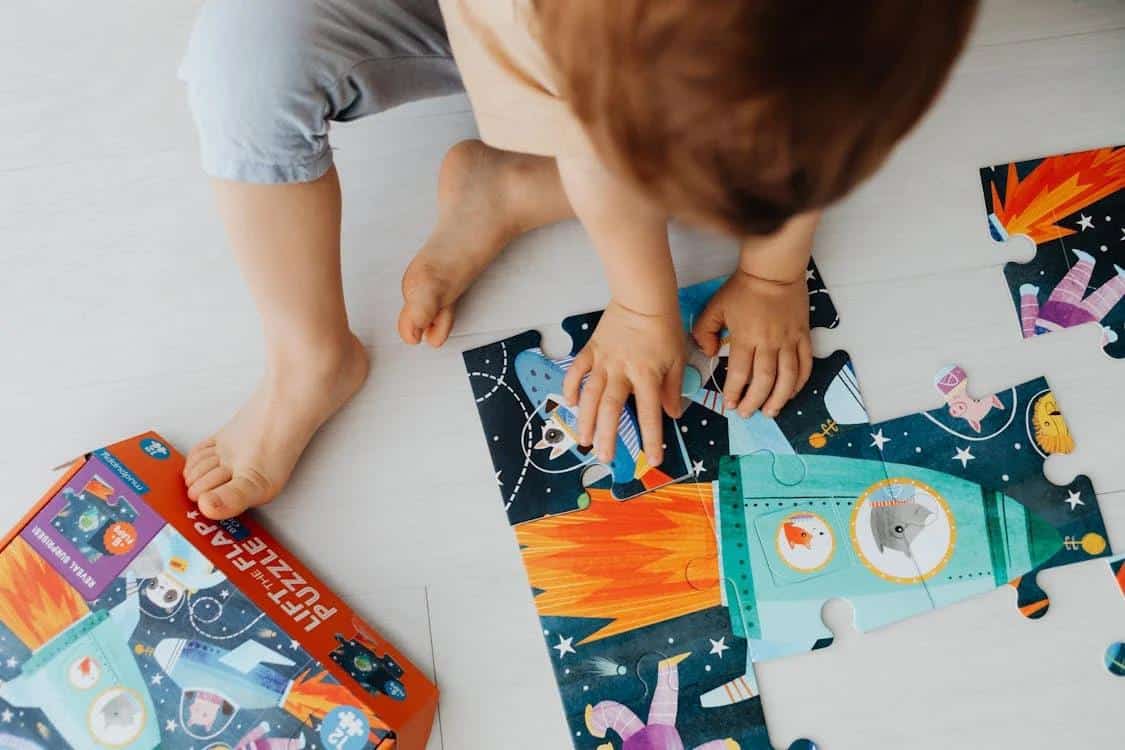
Activities like shape sorting, puzzles, and light tracking help build memory, logic, and spatial awareness.
Sorting objects or placing puzzle pieces also strengthens hand-eye coordination, which is important for both school readiness and daily tasks.
Enhancing Visual Tracking and Focus
Games that involve tracking moving objects help improve a child’s attention span and visual focus. These skills are foundational for reading, writing, and following instructions in a learning environment.
Supporting Emotional and Sensory Regulation
Not all visual sensory play is fast or stimulating. Calming activities such as watching lava lamps, glitter jars, or slow-moving visuals help children manage emotions and stress.
These types of visual sensory input are especially helpful during transitions or times of change, such as settling down for rest or adjusting to new routines.
Types of Visual Sensory Activities
Whether you’re indoors or outside, visual play can be simple, effective, and developmentally valuable. From calming glitter jars to high-energy games like flashlight tag, these visual sensory activities help children improve focus, coordination, and visual processing.
Indoor Visual Activities
- Light tables with colourful shapes: Develops colour recognition, sorting skills, and fine motor coordination.
- Colour sorting bins and kaleidoscopes: Builds pattern recognition, visual discrimination, and attention to detail.
- Glow-in-the-dark toys: Stimulates visual curiosity and imagination, while offering calming input during quiet times or bedtime.
Outdoor Visual Activities
- Nature scavenger hunts: Strengthens observation skills, attention, and understanding of the natural environment.
- Bubble play: Enhances visual tracking, hand-eye coordination, and response to dynamic movement and colour.
- Sidewalk chalk: Supports hand control, spatial awareness, and visual creativity through drawing.
- Cloud-watching: Encourages imagination, visual tracking, and early pattern recognition.
Calming Visual Activities
- Glitter bottles: Offers slow-moving visual input that helps with emotional regulation and sustained attention.
- Lava lamps: Provides rhythmic, flowing movement that promotes calm focus.
- Watching fish in an aquarium: Gives children a peaceful way to visually engage with motion and rhythm.
Interactive and High-Energy Visual Play
- Flashlight tag: Combines movement with light-tracking to improve visual response and agility.
- Mirror play: Encourages visual self-recognition and helps children observe facial features and emotions.
- Balloon batting: Engages hand-eye coordination and tracking of unpredictable motion in a playful setting.
Age-Appropriate Visual Sensory Activities
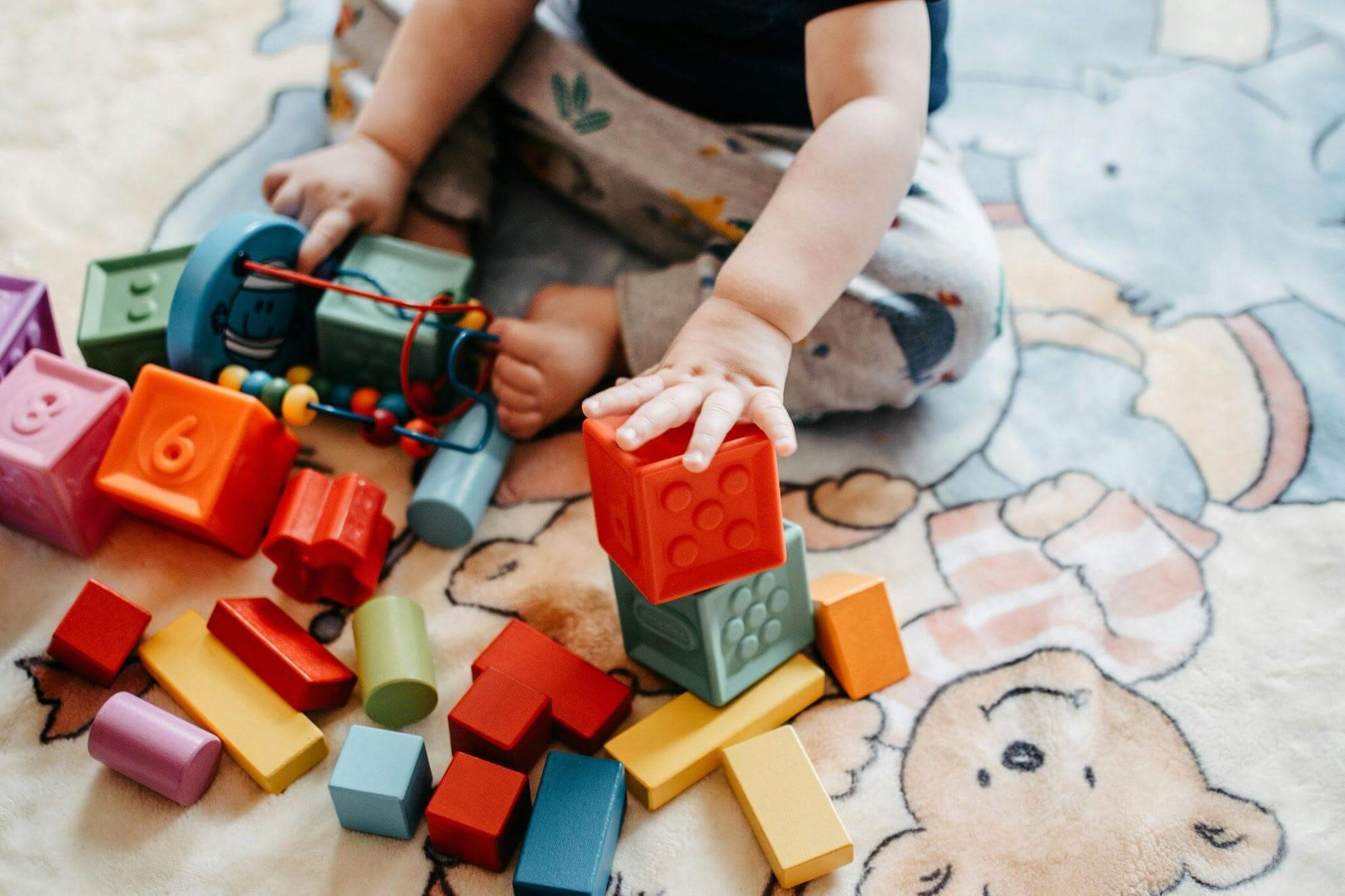
Photo from Pexels: Building skills through block building. Stacking and sorting colourful blocks is one of the most effective visual sensory activities for toddlers, helping develop hand-eye coordination, focus, and early spatial awareness.
As your child grows, their visual needs change. What captures a baby’s attention may no longer interest a preschooler – and that’s expected. Choosing age-appropriate visual sensory activities helps children develop focus, coordination, and creativity in ways that match their developmental stage.
Infants (0–12 months)
For infants’ visual development, high-contrast images such as black-and-white patterns and mobiles stimulate early visual development. Light projection toys that display soft shapes on walls or ceilings help babies engage their gaze and support visual tracking skills.
Toddlers (1–3 years)
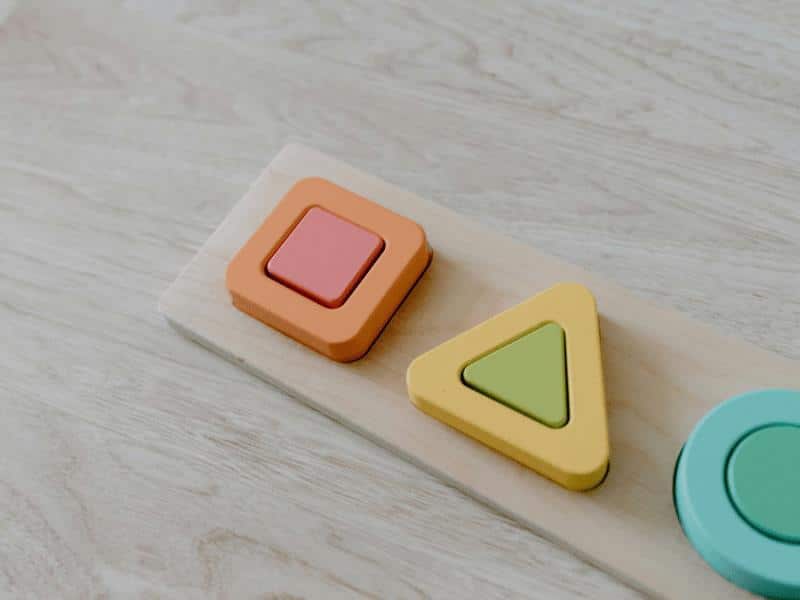
Toddlers benefit from colourful stacking blocks, simple puzzles, and basic matching games. These activities support visual discrimination and hand-eye coordination. Water play with coloured objects also promotes attention and introduces early concepts like cause and effect.
Preschoolers (3–5 years)
Preschoolers are ready for more complex visual sensory activities such as pattern games, mazes, storybooks with vivid illustrations, colour mixing, and memory card games. These experiences strengthen attention span, working memory, and early problem-solving skills – all important for school readiness.
How to Incorporate Visual Sensory Play at Home
You don’t need specialised equipment to support your child’s visual development. With simple touches like soft lighting, bold colours, and easy DIY activities, you can create a home environment that engages their eyes and supports learning. The aim is to make everyday play more visually stimulating and purposeful.
Creating a Visual-Sensory-Friendly Space
Use natural light where possible to support healthy visual development. Add soft lamps to create visual focal points in play areas. Include colourful cushions, wall art, or textured items to provide varied visual input. Rotate toys and displays regularly to maintain your child’s interest and introduce new visual challenges.
Low-Prep DIY Activity Ideas
You can create effective visual sensory activities using everyday items:
- Fill clear bottles with coloured water and glitter to make sensory bottles that support visual tracking and calming focus.
- Cut coloured paper into shapes for simple sorting or matching games to improve visual discrimination.
- Use household items like spoons, cups, and bowls for colour sorting or stacking activities that build hand-eye coordination.
- Create a DIY light box using a clear plastic container and LED lights to illuminate translucent objects or shapes for sorting.
- Tape coloured lines or shapes on the floor to guide walking paths, jumping patterns, or shape recognition games.
- Hang a homemade mobile using ribbons, paper shapes, or lightweight objects to encourage visual tracking in babies and toddlers.
These activities are quick to set up, budget-friendly, and support a range of visual processing skills.
Red Flags and When to Seek Professional Support
As a parent, you know your child best. If your child avoids eye contact, struggles to track movement, or becomes distressed in visually busy environments, it may signal a sensory processing challenge. If these signs persist, trust your instincts and seek professional guidance.
Signs of Visual Sensory Processing Challenges
Common signs to watch for include:
- Avoiding eye contact
- Distress in busy or brightly lit environments
- Difficulty focusing on faces, objects, or during play
- Poor visual tracking of moving items
- Weak eye-hand coordination
These behaviours may indicate challenges with visual sensory processing that could benefit from early intervention.
When to Consult a Paediatric Specialist or Occupational Therapist
If your child shows any of these signs or if their visual sensory development seems delayed, consult a paediatrician or occupational therapist (OT). These professionals can assess your child’s sensory processing and provide tailored strategies or therapies to support development in a structured way.
Expert Tips for Safe and Effective Visual Sensory Play
Too much visual input can overwhelm young children. Finding the right balance is important. Pay attention to your child’s cues – sometimes, reducing stimulation is more effective. While screens may seem like an easy option, real-world visual sensory activities provide more valuable developmental benefits.
Avoiding Overstimulation
Visual sensory overload can lead to fussiness, frustration, or avoidance behaviours. Keep play sessions short and observe how your child responds. If they seem overstimulated, simplify the activity or reduce visual complexity. Increase the level of challenge gradually as your child becomes more comfortable.
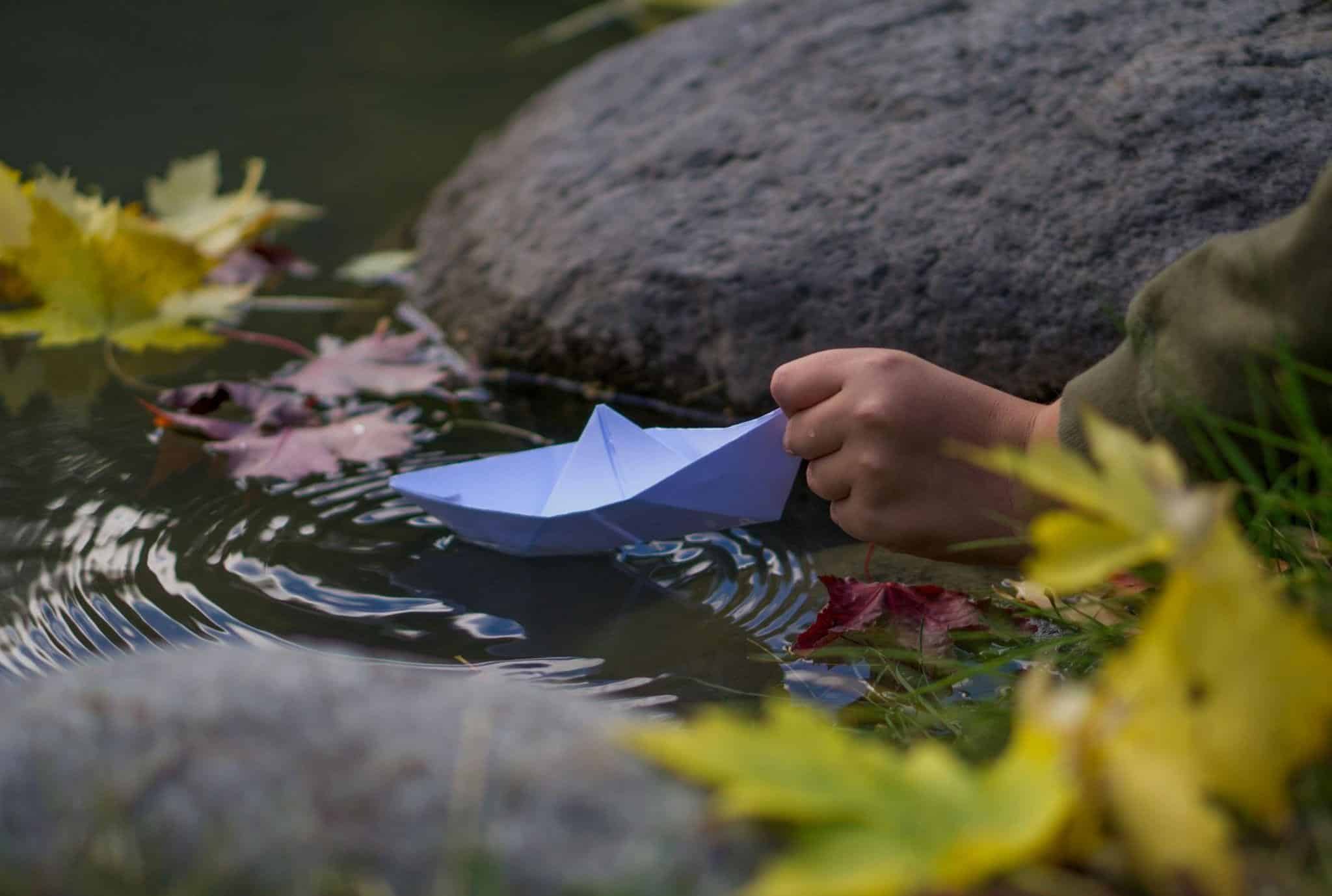
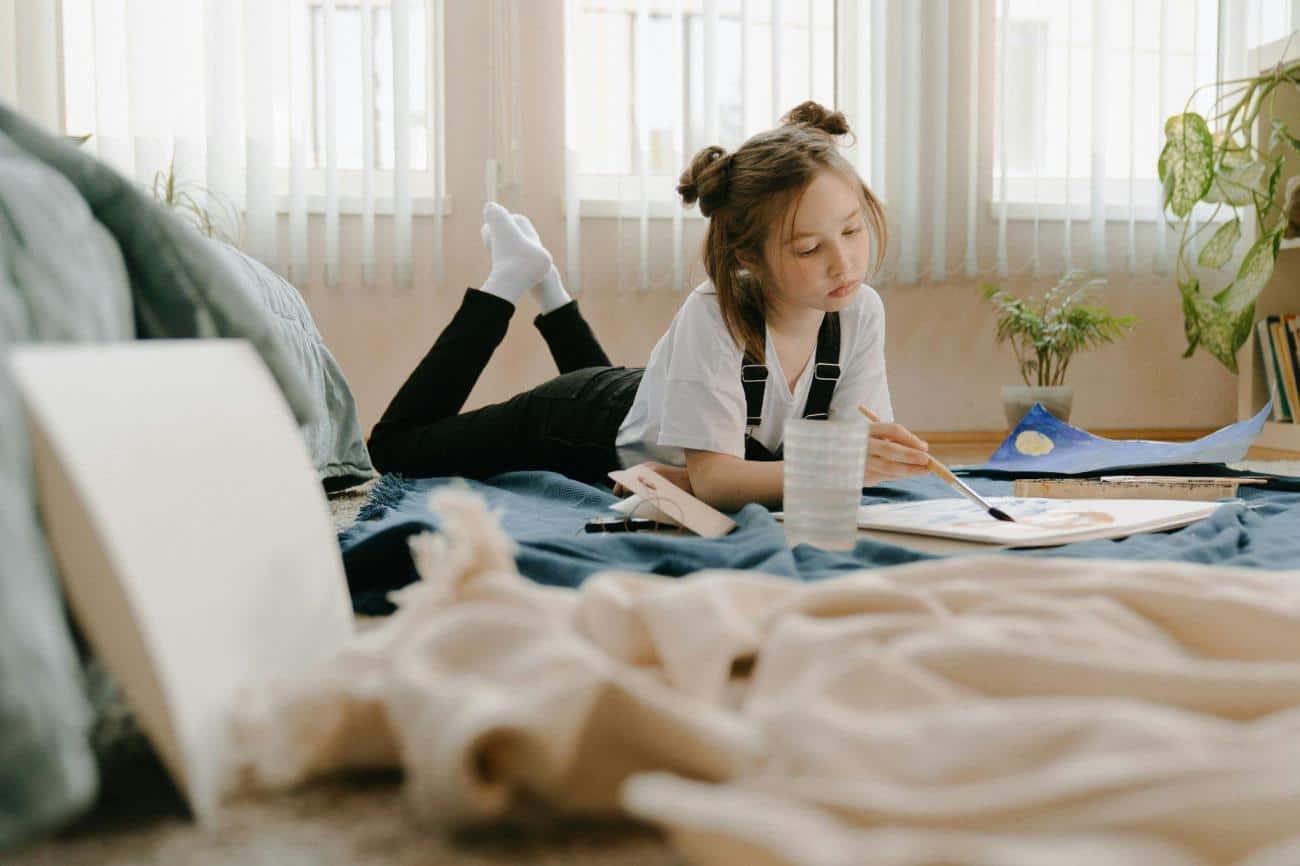
Photo from Pexels: Exploring colours and shapes with paper. Watching a paper boat float and move through water is a simple yet effective visual sensory activity, helping children develop tracking skills and visual focus.
Encouraging Engagement Without Screens
Screens provide visual input, but they lack the hands-on and multi-sensory experiences that support early development. Focus on real-world materials, natural settings, and interactive visual sensory activities to support your child’s learning through movement, touch, and active engagement.
Rotate and Simplify the Visual Environment
Too many colours or moving parts can distract or overwhelm young children. Keep play spaces visually organised by limiting the number of toys and colours in view. Rotating materials weekly helps maintain interest without overstimulation.
Choose Age-Appropriate Materials
Ensure that visual materials match your child’s developmental stage. Infants respond best to high-contrast images and slow movement, while toddlers and preschoolers benefit more from bright colours, interactive visuals, and multi-step activities like puzzles or memory games.
Use Natural and Adjustable Lighting
Overhead lights or screens can cause glare or visual fatigue. Use natural daylight or soft, adjustable lighting to create a comfortable environment. This helps children maintain focus and reduces eye strain during visual play.
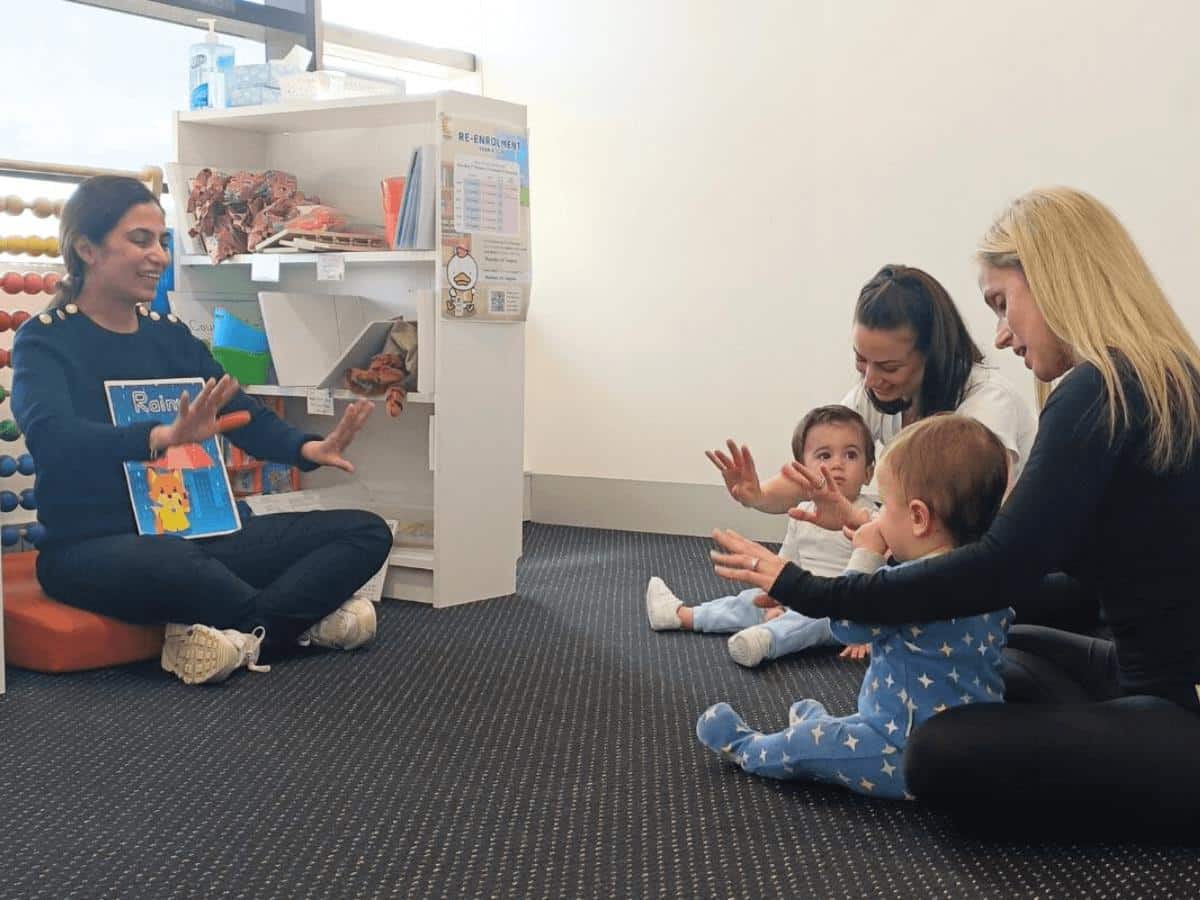
Photo by Shichida Australia: Babies engage in visual sensory activities through songs, gestures, flashcards and more – supporting early eye tracking, attention, and communication skills in a structured learning environment.
Support your child’s visual sensory development with engaging, purposeful activities that build focus, coordination, and emotional regulation during the early years. At Shichida Australia, you’ll find expert-recommended strategies, practical resources, and hands-on tools that strengthen your child’s brain through structured play.
Book a trial class today and give your child the confidence and skills they need to thrive.
FAQ: Visual Sensory Activities
These are activities that stimulate your toddler’s sense of sight, such as watching moving objects, exploring colours and shapes, or tracking light and patterns.
They support focus, hand-eye coordination, memory, emotional regulation, and prepare children for tasks like reading and writing.
Yes. Activities that improve visual tracking and focus can support longer attention spans and better concentration.
You can make glitter bottles, sensory jars, or colour sorting games using household items like water, food colouring, and paper.
Visual sensory stimulation can begin in infancy, using high-contrast images and soft light projections to engage a baby’s developing vision.
Short, consistent sessions are ideal. Even a few minutes each day can positively support visual development.
While screens provide visual input, they lack the multi-sensory, hands-on engagement of physical play and should be used in moderation.
Signs include fussiness, turning away, rubbing eyes, or becoming quiet and withdrawn during or after play.
Yes. Many early learning programs include visual sensory activities to support cognitive development and classroom readiness.
Possible signs include avoiding eye contact, distress in busy or brightly lit spaces, difficulty tracking moving objects, or poor hand-eye coordination.