Which Parenting Styles Work Best for Children?
Parenting is filled with everyday decisions that shape who your child becomes—from how you set rules, to how you respond when they cry, challenge, or question. While there’s no perfect way to parent, understanding the different parenting styles can help you make more intentional choices for your family.
Many experts agree that the authoritative parenting style—a balance of warmth and structure—is most effective in promoting emotional health, resilience, and confidence.
What exactly does this look like in practice? And how does it compare to other styles of parenting? Let’s explore the 4 parenting styles, their impacts, and how you can adopt the best approach for your child’s development.
The 4 Parenting Styles
Psychologists generally recognise four main kinds of parenting styles. Each has a different approach to warmth, structure, and communication—and each comes with its own strengths and challenges.
1. Authoritative Parenting Style: (High Warmth, High Expectations)
This is widely recognised as the most balanced and effective style. Authoritative parents combine clear boundaries with emotional support. They communicate openly, guide with empathy, and encourage children to think independently.
Key Traits: – Warmth, consistency, clear rules, emotional responsiveness, open communication.
Potential Benefits: Children raised with this style tend to be confident, responsible, emotionally secure, and socially capable. They are more likely to perform well in school and adapt well to challenges.
Potential Challenges: Requires time and emotional energy—staying calm, consistent, and responsive takes patience and ongoing effort.
Example: When your toddler resists bedtime, you say, “I know it’s hard to stop playing, but sleep helps your brain and body grow strong.” Then you follow the same bedtime routine every night.
2. Permissive Parenting Style: (High Warmth, Low Expectations)
Permissive parents are nurturing and accepting but often struggle to enforce rules or follow through with consequences. They prioritise their child’s happiness, sometimes at the expense of long-term learning.
Key Traits: High emotional responsiveness, low demands, few rules or boundaries.
Potential Benefits: Children may feel unconditionally loved and enjoy a close relationship with their parents.
Potential Challenges: Without clear boundaries, children may struggle with self-regulation, impulse control, and understanding consequences.
Example: Your preschooler demands sweets before dinner, and you give in—even if it spoils their appetite.
3. Authoritarian Parenting Style: (Low Warmth, High Expectations)
This strict, rule-focused style emphasises discipline, obedience, and respect. Authoritarian parents expect compliance but offer little warmth or room for discussion.
Key Traits: High control, rigid rules, low emotional responsiveness, limited negotiation.
Potential Benefits: Children may follow instructions well and be respectful of authority.
Potential Challenges: They may develop anxiety, low self-esteem, or difficulty thinking independently. Emotional connection and trust may suffer.
Example: Your child breaks a rule, and you respond with a harsh punishment without discussing what went wrong or how to do better next time.
4. Uninvolved Parenting Style: (Low Warmth, Low Expectations)
When it comes to parenting styles, uninvolved parents provide for basic needs but are often detached or emotionally unavailable. They rarely set expectations or engage in their child’s learning or behaviour.
Key Traits: Low responsiveness, low structure, minimal engagement, emotional detachment.
Potential Benefits: In rare cases, a highly independent child might thrive—but typically only with support from other caregivers or environments.
Potential Challenges: Children raised with this style may feel neglected or insecure, and are at higher risk of emotional and developmental difficulties.
Example: Your child struggles at school, but you don’t follow up with teachers or talk about the issue at home.
This strict, rule-focused style emphasises discipline, obedience, and respect. Authoritarian parents expect compliance but offer little warmth or room for discussion.
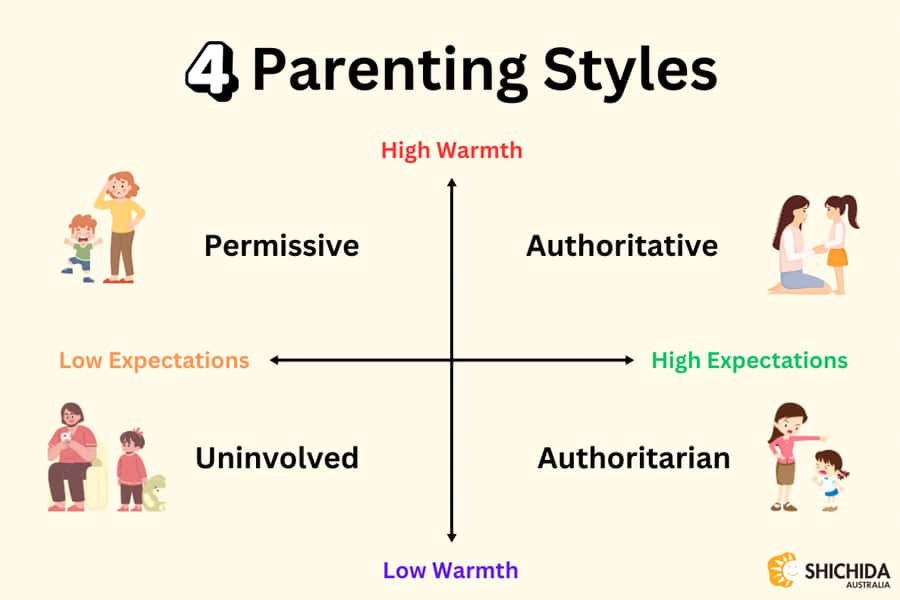
Image: Comparing 4 parenting styles
Comparing the 4 Parenting Styles
Here’s how each style differs when it comes to rules, responsiveness, and overall outcomes:
Why the Authoritative Parenting Style Stands Out
Among all the parenting styles, the authoritative parenting style is often seen as the most balanced and effective. It encourages your child to take ownership of their actions, while still providing the guidance and emotional support they need to thrive.
Authoritative parenting:
- Promotes healthy brain development through warmth and consistency.
- Builds trust and open communication
- Encourages independence, which helps with school readiness and emotional regulation.
- Encourages resilience through gentle but clear boundaries.
That said, parenting isn’t a formula. It’s a relationship. And the more intentional and connected you are in that relationship, the stronger your child’s foundation will be.
How to Practise Authoritative Parenting (Even on Tough Days)
You don’t need to get it right every time—parenting is a journey–however, incorporating a few of these habits can help you align more closely with the authoritative approach:
Explain the “why” behind rules: “We put toys away so no one trips or gets hurt.”
Understanding the reason behind a rule helps children see that rules exist for their safety and wellbeing—not just to control them.
Be consistent with expectations: Children thrive when routines feel predictable.
Consistency gives children a sense of security. When they know what to expect, they feel more in control and are more likely to cooperate.
Offer limited choices: “Would you like to brush your teeth before or after putting on pyjamas?”
This gives children a sense of autonomy within boundaries, helping them feel empowered while still guiding their behaviour.
Model emotional control: Take a breath before responding to a tantrum.
Children learn emotional regulation by watching adults. When you stay calm, you’re teaching them how to handle big feelings too.
Validate emotions: “I see you’re frustrated. That’s okay. Let’s figure this out together.”
Acknowledging your child’s feelings shows them that emotions are normal and manageable, which builds trust and emotional awareness.
Celebrate effort: Praise how they try, not just the result: “You worked really hard on that puzzle!”
Focusing on effort encourages a growth mindset. It teaches kids that persistence matters more than perfection.

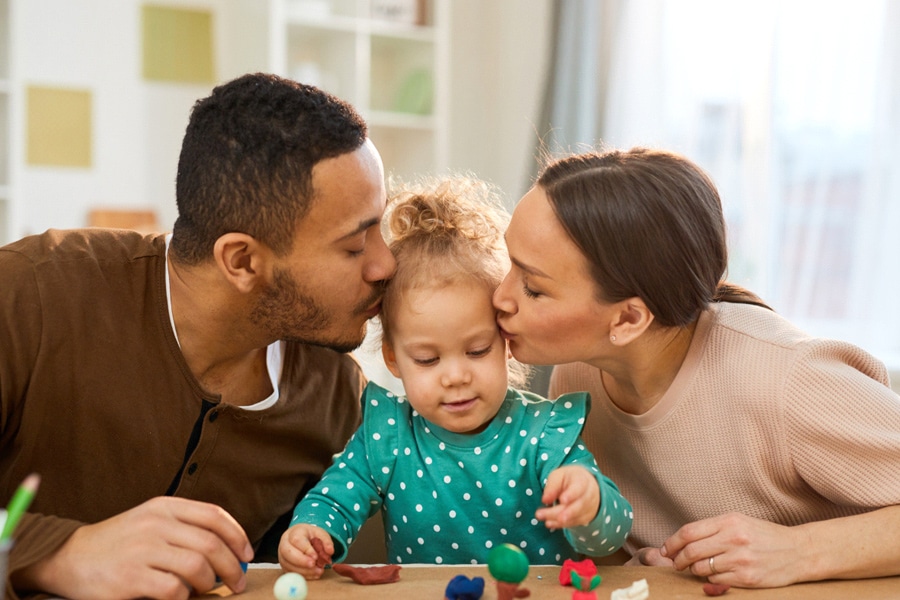
The way parents respond, guide, and connect with their child – known as parenting styles – shapes emotional security, behaviour, and lifelong habits from an early age.
There’s No One-Size-Fits-All Approach to the Best Parenting Style
While the authoritative parenting style is often highlighted as the most effective overall, it’s important to remember that every child—and every parent—is different. What works well for one family might not suit another.
Children come with unique temperaments, sensitivities, and developmental needs. Some children may thrive with clear structure and emotional warmth, while others might need more flexibility or reassurance to feel confident. A strong-willed child might benefit from firm boundaries, while a shy or anxious child might respond best to gentle encouragement and emotional support.
Likewise, parents bring their own personalities, values, and experiences into how they raise their children. Cultural background, family dynamics, and personal challenges can all shape parenting choices.
Rather than aiming for perfection or following a strict formula, the goal is to find an approach that feels authentic, sustainable, and responsive to your child’s needs.
You might find that you draw elements from different parenting styles depending on the situation—and that’s okay.
What matters most is being attuned to your child, offering consistent support, and being open to growing and adapting along the way. Parenting is a journey, and finding your own rhythm—rooted in love and connection—is the most powerful guide of all.
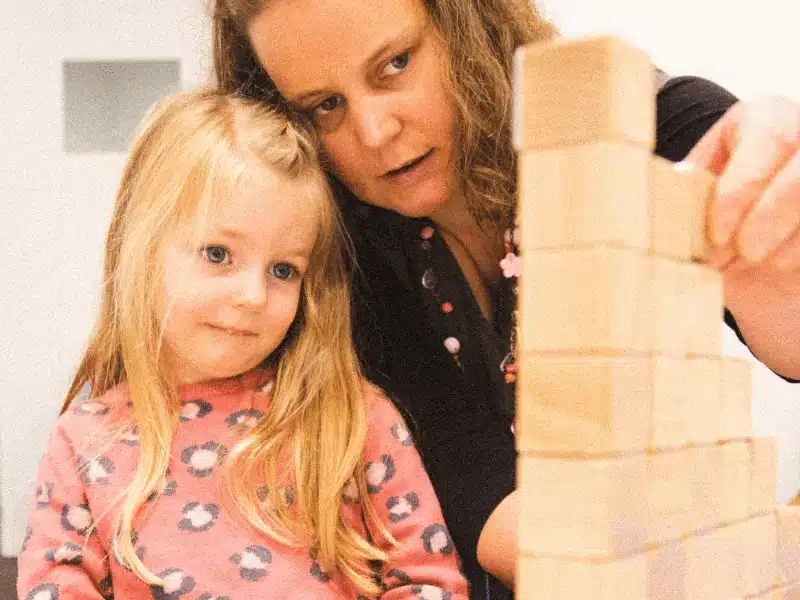
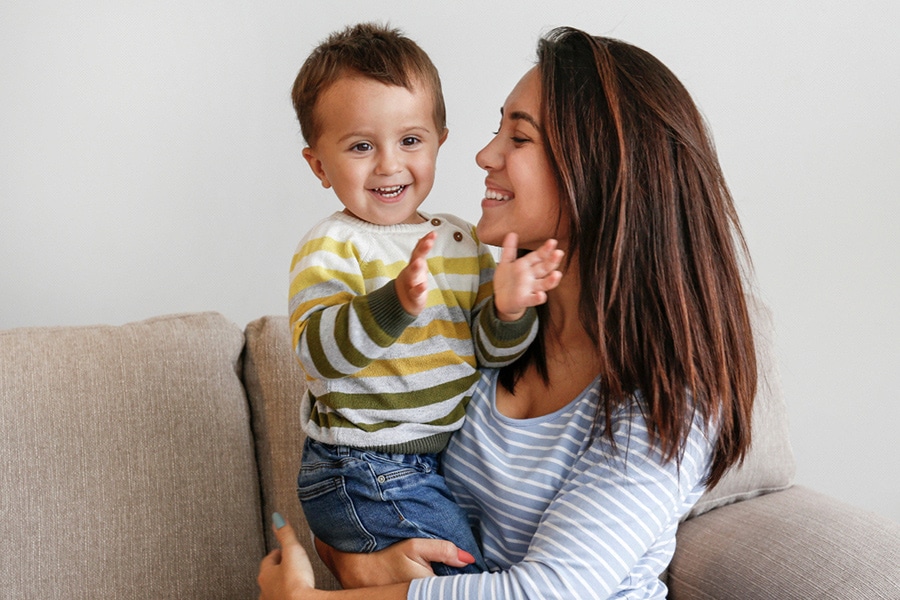
The way parents respond, guide, and connect with their child – known as parenting styles – shapes emotional security, behaviour, and lifelong habits from an early age.
The Shichida Approach
At Shichida Australia, we align closely with the principles of authoritative parenting—providing both structure and emotional warmth. Our program encourages parents to actively participate in their child’s development by becoming their first and best teacher.
Through fun, age-appropriate activities, we help parents:
- Set achievable expectations
- Celebrate effort and resilience
- Engage children through positive affirmation and shared learning
Our lessons aren’t just about early literacy or numeracy – they’re about nurturing kind, curious, and confident children who thrive emotionally and intellectually.
Ready to support your child’s emotional development and learning journey?
Join the Shichida community and explore how our brain-based, heart-led approach can help you raise a child who’s confident, compassionate, and ready to shine. Book a trial class today!