Experiential Learning: A Guide to Raising Curious Kids
They say curiosity kills the cat, but for children, curiosity awakens wonder, fuels growth, and breathes life into learning. It’s the drive behind exploration and the heart of discovery.
In this article, we’ll explore the concept and benefits of experiential learning for kids – an approach that goes beyond memorisation and encourages children to learn by doing. You’ll discover actionable learning strategies and practical ways to implement experiential learning at home, backed by expert insights and real-life examples to help your child thrive.
Understanding Experiential Learning
Experiential learning is all about helping your child gain knowledge through direct experiences and reflective learning and practice. Unlike traditional learning, which often relies on memorisation, experiential learning invites children to engage with the real world to your child to actively engage in real-world learning tasks exploring concepts hands-on, and reflecting on what they’ve learned.
This learning through experience builds a deeper understanding of how the world works. It also encourages:
- Critical thinking
- Problem-solving skills
- Confidence through discovery
Definition and Core Principles
Experiential learning is hands-on learning – learning by doing. It’s a process where your child actively engages in an experience, reflects on it, and learns from it.
Here are the core principles of experiential learning for kids:
- Active engagement: Your child is part of the action, not just watching from the sidelines.
- Reflection: They think back on what happened – what worked, what didn’t, and how it made them feel.
- Real-world application: Lessons connect directly to everyday life and challenges.
When you give your child the freedom to try, fail, adjust, and try again, you’re building more than just academic skills. You’re teaching them how to problem-solve, persist, and navigate life with confidence.
Historical Background
The foundation of experiential learning was laid by educational pioneers like John Dewey, who championed learning through doing, and Jean Piaget, who explored how children build knowledge through interaction.
Later, David Kolb formalised these insights into a clear, structured framework. Together, their work shows that meaningful learning happens when children engage with their world – and then reflect on what it means.
The Experiential Learning Cycle
To understand how experiential learning for kids unfolds, look at David Kolb’s Experiential Learning Cycle. It includes four connected stages:
- Concrete Experience – Your child tries something new (or familiar) in a hands-on way.
- Reflective Observation – They think about what happened and how it felt.
- Abstract Conceptualisation – They connect their experience to bigger ideas or lessons.
- Active Experimentation – They use what they learned and try again, this time with intention.
This cycle can happen over the course of an hour, an afternoon, or several weeks. The goal is to encourage your child to keep learning, adapting, and growing – through experience.
Benefits of Experiential Learning for Children
As a parent, you want more than just good grades – you want your child to grow into a confident, thoughtful, and curious individual. Experiential learning supports that journey.
Instead of memorising facts, your child learns by doing, reflecting, and applying what they’ve discovered in real-life situations. This active learning approach nurtures both the heart and mind, helping children thrive in and out of the classroom.
Enhances Critical Thinking and Problem-Solving Skills
When your child explores, experiments, or tackles challenges on their own, they naturally begin to think critically.
Experiential learning encourages children to:
- Ask questions
- Test ideas
- Make mistakes and try again
It’s not just about getting the right answer – it’s about learning how to think. These real-world learning moments shape your child into a confident problem-solver, ready to navigate everyday challenges.
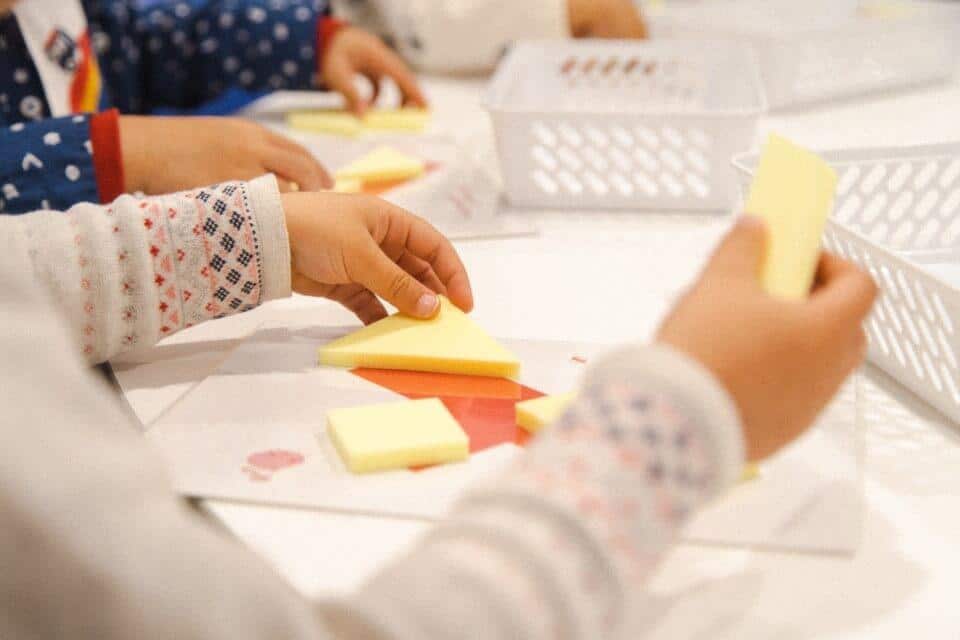
Photo by Shichida Australia: Hands-on activities like puzzles and shape-building help children develop critical thinking and problem-solving skills – core benefits of experiential learning for kids.
Promotes Emotional Intelligence and Empathy
Through hands-on experiences, your child learns more than facts – they begin to understand themselves and others.
Whether it’s working on a group project, helping a friend, or caring for a plant, your child is developing emotional awareness. They learn to:
- Recognise feelings
- Listen and communicate
- Show kindness and empathy
These emotional skills are just as essential as academics when it comes to raising a compassionate, well-rounded child.
Encourages Lifelong Learning and Curiosity
You’ve probably seen your child’s eyes light up when they discover something new. Experiential learning for kids taps into that natural curiosity.
It makes learning fun, engaging, and meaningful – so your child wants to keep learning. Instead of studying to pass a test, they’re exploring because they care. And that kind of curiosity becomes the foundation of lifelong learning.
Implementing Experiential Learning at Home
You don’t need a classroom to give your child meaningful learning experiences. Your home and community are full of opportunities to support experiential learning for kids – helping them learn by doing.
Experiential learning at home fits easily into daily routines and builds:
- Critical thinking
- Emotional awareness
- Curiosity
All while making learning fun, interactive and meaningful.
Everyday Activities as Learning Opportunities
Everyday routines can become powerful learning moments when you actively involve your child.
- Cooking together teaches maths (measuring, counting), science (heat changes, chemical reactions), and life skills like responsibility.
- Gardening introduces nature, biology, sensory exploration, and patience.
- Grocery shopping can turn into a lesson in budgeting, reading food labels, or choosing healthy options.
The key is to take a few extra moments to:
- Ask reflective questions
- Talk through the process
- Let your child take the lead whenever possible
Encouraging Play-Based Learning
Play isn’t just entertainment – it’s one of the most powerful forms of experiential learning for kids.
Through imaginative play, construction games, and role-playing, children:
- Explore real-world scenarios
- Solve problems
- Express thoughts and feelings
- Build social and cognitive skills
Ideas to try:
- Set up a pretend shop or post office
- Play strategy-based board games
- Build with blocks or recyclable materials and let them design their own structures
Follow their lead – you’ll be amazed by how much they learn when they’re driving the play.
Utilising Community Resources
Your local community can become an extended classroom for hands-on learning.
Take your child to:
- A local museum or art gallery
- A botanical garden or nature trail
- A multicultural festival or library workshop
During outings:
- Ask open-ended questions (“What do you think that is for?”)
- Connect what they see to what they’ve learned at home
- Let them make their own observations
Many communities offer free or low-cost interactive exhibits, storytime sessions, or STEAM-based activities that promote experiential learning in a social setting.
Overcoming Challenges in Experiential Learning
If you’ve ever felt like experiential learning sounds great in theory but hard to manage in real life – you’re not alone.
Between work, chores, and everything else on your plate, creating hands-on learning experiences can feel like just another item on an already-packed to-do list.
But here’s the good news: it doesn’t have to be big or complicated. In fact, some of the most meaningful learning moments happen when you least expect them.

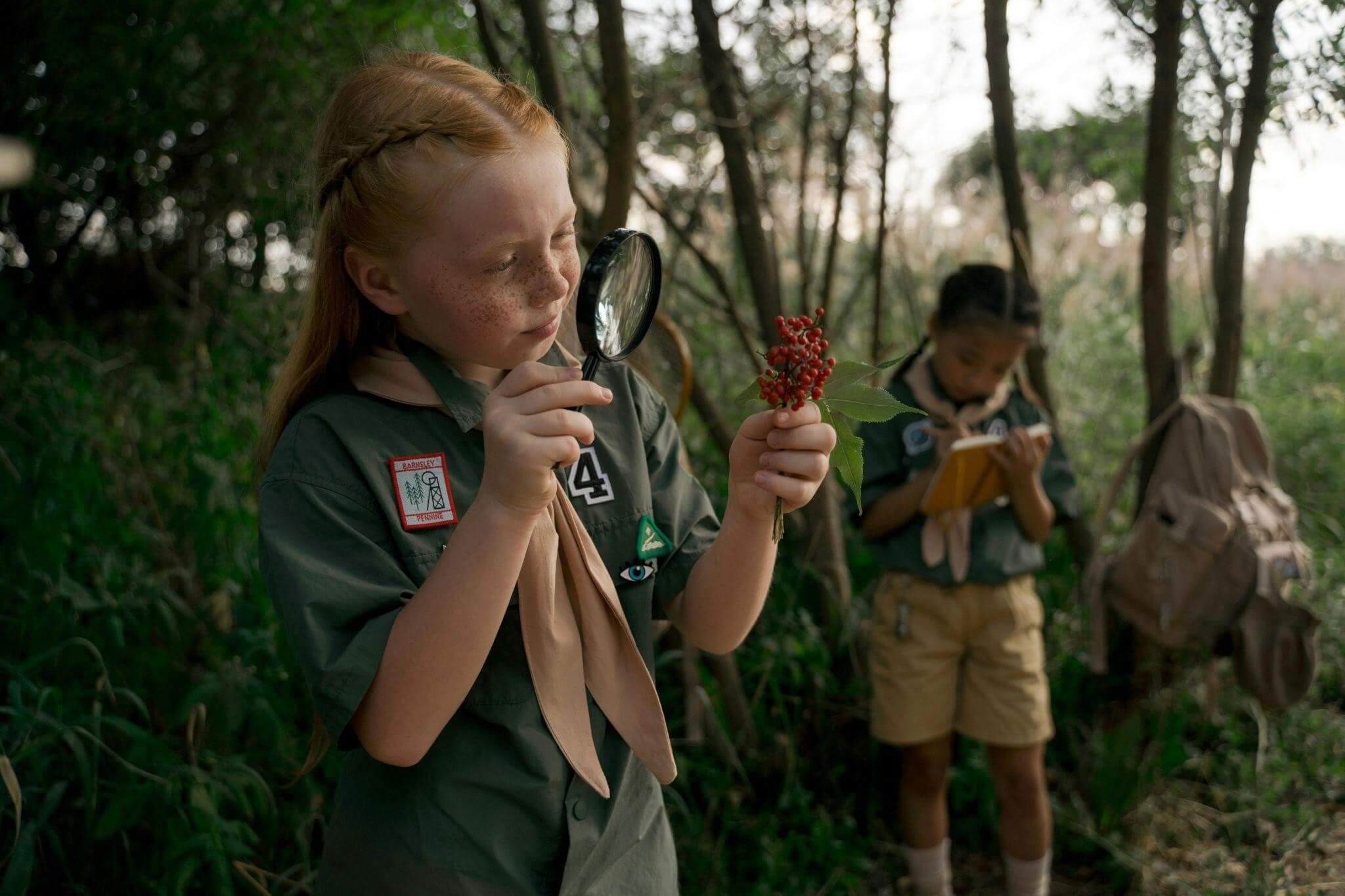
Photo from Pexels: Experiential learning starts right at home
Time Management Strategies
Let’s face it – there’s rarely a perfect block of time waiting to be filled with educational activities. But you can fit experiential learning at home into the small, everyday pockets of your routine.
Think about the moments when your child is already with you:
- Prepping dinner
- Sorting laundry
- Walking to the shop or park
Each one is an opportunity to:
- Ask questions
- Talk through decisions
- Explain how something works
It doesn’t need to be long – it just needs to be intentional. And if a day gets away from you? That’s okay. Consistency matters more than quantity. A few engaged minutes here and there add up over time.
Budget-Friendly Learning Activities
You don’t need fancy materials or a Pinterest-perfect setup. Most of what you need for hands-on learning is already in your home.
Try the following:
- Turning cardboard boxes into castles or cars
- Making your own board game
- Drawing obstacle courses with sidewalk chalk
- Collecting leaves for a nature collage
- Turning a walk into a scavenger hunt or photography project
Libraries and community centres often offer free or low-cost programs, craft sessions, and storytimes that spark curiosity – and many are drop-in friendly, so there’s no pressure to commit.
Adapting to Different Learning Styles
Every child learns differently. If your child doesn’t seem excited about one activity, try another.
Maybe they:
- Prefer building over writing
- Learn best by moving rather than sitting
- Like to talk through what they just did
There’s no “right” way to learn – just the way that works for your child. You don’t need to become an expert in learning styles. Just pay attention to:
- What lights them up?
- What keeps them engaged without being forced?
Collaborating with Educators
Parent involvement in education plays a vital role in a child’s learning journey – but it doesn’t have to be a solo mission.
Teachers guide your child through meaningful learning experiences every day. Working together with educators creates a seamless connection between school and home, especially when supporting experiential learning.
When parents and teachers communicate openly, you create a well-rounded, consistent approach to your child’s growth – bridging classroom lessons with real-world application.
Communicating with Teachers
Start with a conversation. Ask your child’s teacher:
- What hands-on projects or learning goals are they currently focusing on?
- How can you reinforce those goals through experiential learning at home?
Share any activities you’ve tried – like cooking, nature walks, or sensory games – and express your interest in supporting learning through real-life experiences.
If your child is struggling, ask how you can help through simple, active tasks that build confidence and understanding outside the classroom.
When you build this partnership, learning becomes more connected, consistent, and meaningful – for both you and your child.
Participating in School Activities
Your presence makes a bigger impact than you might think.
- Join field trips
- Volunteer for hands-on classroom projects
- Talk through assignments with your child at home
Support after-school programs or clubs that encourage creativity, exploration, or problem-solving. And during parent–teacher meetings, don’t hesitate to ask:
- “How can I build on what they’re learning through experience?”
- “Are there any experiential projects coming up I could get involved in?”
When children see learning as a shared experience, they feel supported – and they’re far more likely to stay engaged and enjoy the process.
Measuring the Impact of Experiential Learning
As a parent, you might wonder: Is experiential learning really making a difference in my child’s development?
The good news is – you don’t need formal tests or report cards to find out.
Instead, it’s about:
- Observing how your child responds to real-world challenges
- Encouraging self-reflection
- Noticing growth in everyday behaviours
Let’s explore a few practical ways to track progress and ensure your child is thriving through hands-on learning.
Observing Behavioral Changes
Often, the clearest signs of learning don’t show up on a worksheet – they show up in your child’s behaviour.
As your child engages in experiential activities, watch for subtle but meaningful shifts:
- Are they more confident when trying new things?
- Do they show more initiative in solving problems or handling disagreements?
- Are they asking more questions or showing greater curiosity about the world?
- Do you notice better communication skills, patience, or independence?
These are real, measurable outcomes of experiential learning – even if they don’t fit into a standardised test.

Photo by Shichida Australia: Experiential learning often leads to visible changes in behaviour, like increased confidence, engagement, and enthusiasm for learning.
Encouraging Self-Reflection in Children
Self-reflection helps children make sense of their experiences and turn them into lasting lessons.
After an activity, take a few moments to talk it through:
- “What went well?”
- “What was tricky?”
- “What would you do differently next time?”
- “How did it make you feel?”
You can also:
- Keep a reflection journal for older children
- Let younger kids draw or talk through their thoughts
- Use simple emojis or colours to rate how they felt about what they did
This process helps children internalise their learning, strengthens emotional awareness, and builds a habit of critical thinking.
Resources and Further Reading
If you’re interested in learning more about experiential learning and how to implement it effectively at home, here are some great resources to help you dive deeper:
Books
- “The Power of Play” by David Elkind – Explores how play naturally supports children’s learning and development through experience.
- “Experiential Learning” by Colin Beard & John Wilson – Offers hands-on strategies for parents and educators to make learning more meaningful and active.
Websites
- SplashLearn – Packed with tips and activities that bring learning to life at home.
- Shichida Australia – Focuses on early learning through real-world experiences, games and activities with fun brain-based education classes.
Organisations
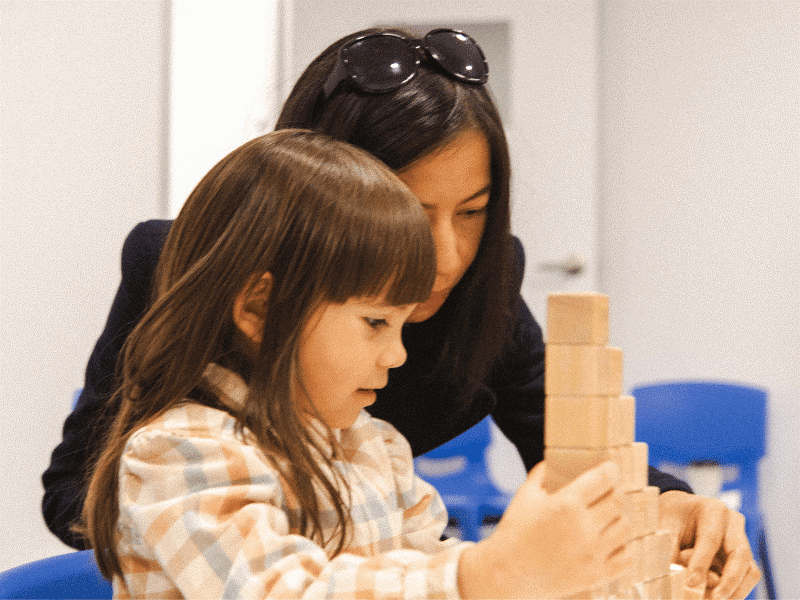
Photo by Shichida: Experiential learning activities like block play help children develop spatial awareness, problem-solving skills, and real-world thinking.
Don’t just tell your child about the world, let them experience it. From your kitchen to your community, learning opportunities are everywhere. Give your child the chance to learn by doing, not just by memorising.
Book a trial class with Shichida Australia and experience how hands-on activities can develop curiosity, boost confidence, and build real-world skills.
FAQs
Experiential learning is a hands-on approach where children learn by doing. Instead of memorising facts, they engage directly with activities, reflect on their experiences, and apply what they’ve learned to real-world situations. It’s learning that sticks because it’s active, meaningful, and practical.
Experiential learning helps children develop critical thinking, problem-solving, emotional intelligence, curiosity and motivation. It teaches them to handle challenges, think deeply, and stay engaged in their own learning journey.
Yes! Experiential learning at home is easy to incorporate into everyday life. Activities like cooking, gardening, building, exploring nature, or crafting all offer chances for learning by doing. The key is to make these moments interactive and reflective so your child connects actions to outcomes.
Here are a few simple examples:
- Cooking: Teaches measurement, sequencing, and science Gardening: Builds knowledge of biology and responsibility
- Community projects: Develop empathy and teamwork
- Nature walks: Encourage observation and curiosity
- Creative art with recycled materials: Sparks creativity and problem-solving
Look for behaviour-based signs of growth:
- Increased curiosity and independence
- Willingness to ask questions or take initiative
- More confident decision-making
- Expressing what they learned from an experience
You can also prompt self-reflection by asking, “What did you learn?” or “What would you do differently next time?”