
Cognitive Development in Early Childhood
Every individual isn’t born with fully developed cognitive abilities. These skills are gradually acquired, and supporting them – especially in early childhood – is essential.
If you’re a parent or caregiver, this article offers practical ways to support your child’s cognitive development in early childhood.
What Is Cognitive Development in Early Years?
Cognitive development refers to how a child learns to think, explore, and make sense of the world. It includes memory, attention, language acquisition, and problem-solving skills.
In the past, researchers believed infants lacked meaningful intellectual abilities. However, pioneers like Jean Piaget – through her Theory of Cognitive Development – demonstrated that even toddlers and infants possess important cognitive skills that help them learn and process information.
By nurturing cognitive development in the early years, you’re not only supporting your child’s current growth but also laying the foundation for future academic and social success.
Key Components of Cognitive Development in Early Childhood
To understand cognitive development more clearly, here are some of its core components:
- Attention: The ability to focus on relevant information and respond accordingly.
- Memory: The ability to store and recall information, from recognising familiar people to remembering basic instructions.
- Perception: Helps children interpret their environment by receiving and processing sensory input.
- Reasoning: Supports early thinking skills by allowing children to analyse, compare, and understand new information.
These skills work together to help young children learn, make decisions, and navigate everyday situations.
Why Early Years Matter Most
Early childhood is a period of rapid brain development and a critical time for cognitive development. At birth, a child has around 2,500 synapses (connections between neurons) per neuron. Thanks to Neuroplasticity, this number increases significantly in the early years.
By age 3, a child’s brain may have up to 15,000 synapses per neuron – far more than an adult’s. This remarkable stage is often referred to as the golden period of development, when the brain is most adaptable and responsive to learning.
As children grow, the brain strengthens the connections they use most and eliminates those that are less active. This process is shaped by their experiences and environment, making early exposure to rich, engaging activities critical for long-term cognitive development.
Stages of Cognitive Development in Early Childhood
If you want to support your child’s growth from the very beginning, understanding the stages of cognitive development is an ideal place to start. Each phase brings new abilities as children learn how to think, observe, and interact with the world.
Cognitive Development Milestones (0–12 Months)
The first year of life is marked by rapid brain growth and early forms of exploration. Babies begin to build the foundation for more complex cognitive skills:
- Visual tracking: Babies learn to follow moving objects with their eyes, helping the brain process motion and spatial relationships.
- Object permanence: Around this age, they begin to understand that objects still exist even when out of sight – such as when a toy is hidden under a blanket.
- Cause and effect: Babies start to grasp that their actions can produce outcomes, like pressing a button to hear a sound.
Cognitive Development Milestones (1–3 Years)
Between ages 1 and 3, toddlers become more curious, observant, and independent. Their cognitive skills grow through active exploration:
- Symbolic play: They assign meaning to objects, such as pretending to feed a toy animal or using a block as a phone.
- Basic reasoning: Early problem-solving appears – for example, figuring out how to stack blocks without them falling.
- Imitation: Toddlers copy familiar actions, like brushing their hair or mimicking how someone stirs a bowl.
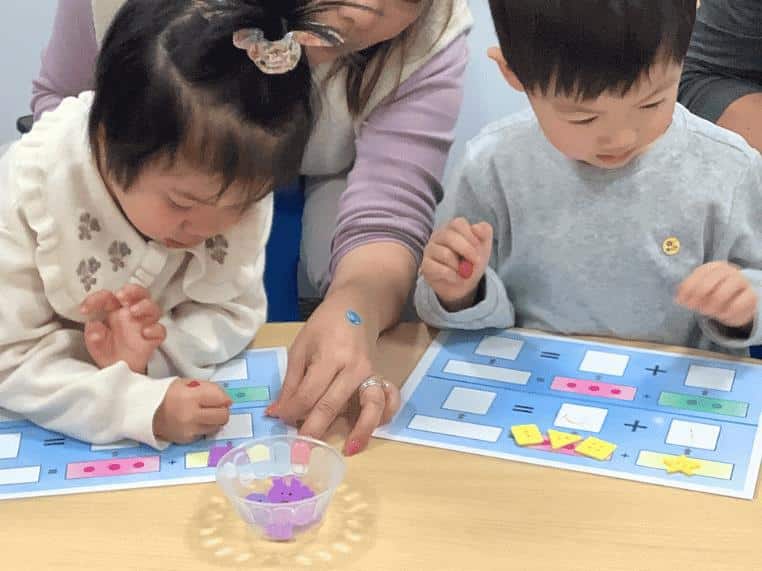
Photo by Shichida Australia: Toddlers and parents working together on early numeracy games – supporting cognitive development in early childhood through hands-on problem-solving and guided play.
Cognitive Development Milestones (3–5 Years)
Preschool-aged children between 3 and 5 show noticeable progress in thinking, language, and reasoning. This stage includes more advanced cognitive development milestones:
- Complex problem-solving: They can complete multi-step tasks like puzzles or simple games with rules.
- Storytelling and comprehension: They begin to understand and retell stories, using imagination and logical sequencing.
- Early math and language use: Many children can recognise numbers, name shapes, and form full sentences using a growing vocabulary.
The Role of Play in Cognitive Development
Play is one of the most effective and accessible ways to support cognitive development in early childhood. Simple, purposeful play can strengthen thinking skills, problem-solving, and attention – without the need for structured lessons or expensive tools.
Types of Play That Stimulate Thinking
Early learning strategies that include play are proven to support cognitive development, and one of the most effective starting points is pretend play.
According to McAloney, K., and Stagnitti, K. (2009), children with well-developed pretend play skills tend to be more socially competent and better able to engage in classroom activities.
Other types of play that support thinking include:
- Sensory play: Helps children process information through sight, touch, sound, and movement.
- Logic-based games and building blocks: Encourage reasoning, problem-solving, and critical thinking (Mehadi Rahman, 2019).
- Outdoor play and exploration: Activities like treasure hunts stimulate curiosity, observation skills, and spatial awareness.
Each of these forms of play contributes to the development of core thinking skills by creating opportunities for hands-on learning and exploration.
How Play Enhances Executive Function
A 2021 study by Gib R et al. demonstrated that the right types of play significantly enhance brain development and executive function – a group of mental skills that includes memory, flexible thinking, and self-control. Executive function is considered a strong predictor of future academic success and life outcomes.
In early childhood, play helps strengthen:
- Working memory: Remembering and using information in real time.
- Inhibitory control: Managing impulses and staying focused on tasks.
- Cognitive flexibility: The ability to adapt to new rules or switch between tasks.
By encouraging play that targets these areas, parents and educators can give children a strong foundation for future learning.
Factors Influencing Cognitive Development in Early Childhood
Every child’s cognitive development, including your own child’s, is shaped by a combination of internal and external factors. Understanding these influences can help parents create a supportive environment for learning and growth.
Brain Health and Nutrition
From birth, brain health and nutrition play a key role in cognitive growth. Nutrients such as omega-3 fatty acids – especially DHA – are vital for brain development and memory function in early childhood.
Other important factors include regular sleep, a balanced diet, and proper hydration. These contribute to focus, concentration, and overall brain function, all of which are essential for cognitive development.
Social and Emotional Environment
The social and emotional environment also has a significant impact. A secure attachment between a child and caregiver builds trust, which forms the foundation for healthy emotional and cognitive growth.
Responsive parenting – such as paying attention to a child’s cues and responding with warmth and consistency – supports mental health and encourages problem-solving skills. Emotional regulation, often developed through everyday experiences and modelling, further enhances cognitive performance and readiness for school.
Screen Time and Cognitive Impact
According to the American Academy of Pediatrics screen time should be limited for very young children – especially those under 18 to 24 months – as research shows that children in this age group learn best through direct human interaction.
For children aged 2 to 5 years, the recommendation is up to one hour of high-quality screen time per day.
While excessive or passive screen use can affect executive function and learning, not all screen time is equal. When screen-based activities are interactive, educational, and involve a parent or caregiver, they can support cognitive development.
Digital learning programs that are ad-free, age-appropriate, and designed with early learning goals in mind offer more meaningful engagement than passive viewing. If you choose to include screen time in your child’s routine, look for content that is:
- Educational and skill-building
- Encouraging participation, not just watching
- Designed for co-viewing or parent involvement
- Free from ads and distractions
- Developed with child safety in mind
Purposeful screen use, in moderation, can complement real-world play and serve as an additional tool to support early learning.
Supporting Cognitive Development at Home
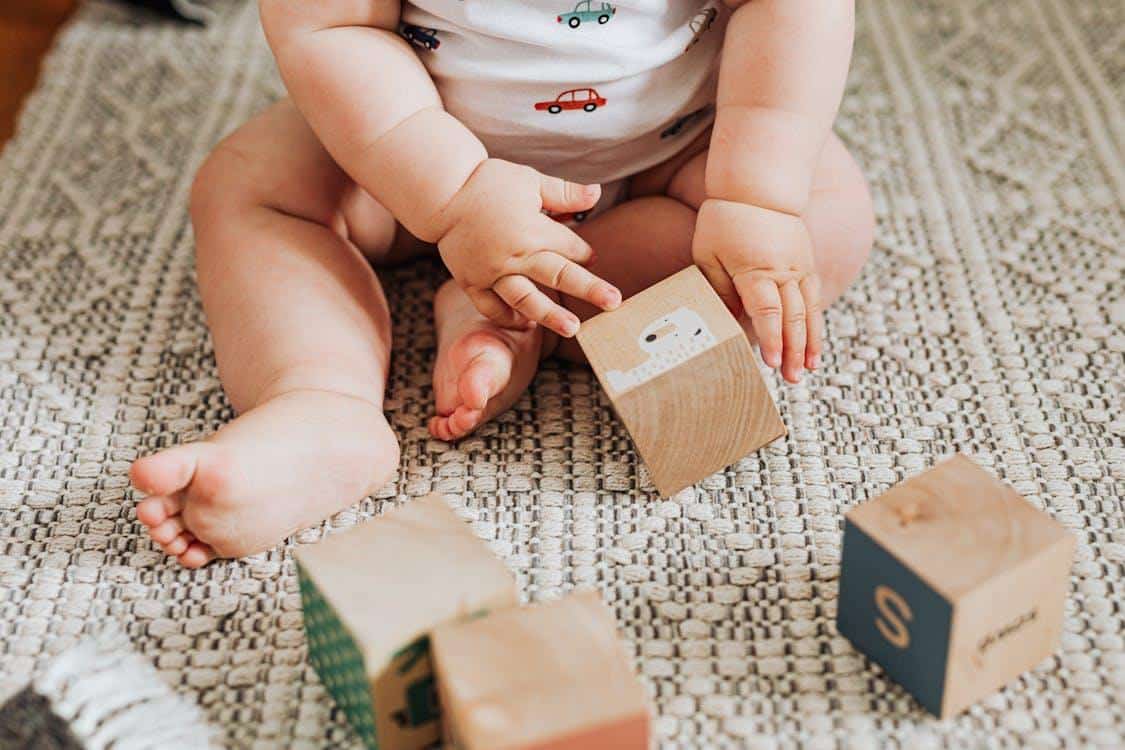
Photo from Pexels: A young child playing with wooden blocks. These type of activities are great for cognitive development in early childhood.
Supporting brain development in children at home doesn’t need to be complicated or costly. Everyday routines and simple materials can play a powerful role in helping your child think, learn, and grow.
Daily Routines That Support Learning
A consistent daily routine can offer more benefits than many realise. Activities like helping with small chores, transitioning smoothly between tasks, and following simple schedules can teach children responsibility, sequencing, and time management – important building blocks for cognitive development.
Encouraging Curiosity and Independent Thinking
One of the most effective ways to support cognitive development is by encouraging your child’s natural curiosity. Give them safe opportunities to explore and make decisions. Promote independent thinking by asking open-ended questions such as, “What do you think will happen if we try this?” or “Why do you think that worked?”
Best Toys and Materials for Cognitive Growth
Choosing cognitive toys that challenge the brain supports both problem-solving and creativity. These materials are ideal for building cognitive skills at home:
- Puzzles or tangram-based challenges
- Wooden blocks or stacking cups
- Colour or shape sorting toys
- Puppets for role play and communication
- Storybooks with rich language and visuals
These tools help reinforce memory, attention, reasoning, and early language in a hands-on, engaging way.
Recognising and Addressing Delays
Childhood learning doesn’t always have a continuous trajectory, and along the way, there may be delays that you – as a parent, teacher or caregiver – might encounter. Recognising these signs early can help you support your child’s progress more effectively.
Common Signs of Cognitive Delays
As stated by the Centers for Disease Control, cognitive delays can occur in 12 of every 1,000 children. For better insight, here are the most common signs to watch for:
- Late language: When your child struggles to form simple sentences.
- Difficulty with problem-solving: For example, challenges when playing puzzles or completing everyday tasks like sorting or stacking.
- Inattention: Particularly between the ages of 3 to 5, your child may have trouble staying focused or following simple instructions.
Seeking Professional Support
While there’s no definite medication to avoid cognitive delays, they can be managed. If you notice significant delays in your child, like those listed above, the best course of action is to seek help from a professional such as your Pediatrician or Psychologist. They can assess your child and provide tailored strategies to support their development.
Summary for Parents
To sum up, cognitive development is a crucial part of your child’s overall growth and their future academic and social success. It’s also important to remember that children learn differently. Just because one child is better at problem-solving doesn’t mean every child should be at the same level at the same time.
Development is heavily influenced by engagement and environment. When in doubt, it’s always better to consult a professional than to make assumptions.
What You Can Do Today
Here are simple, actionable tips you can try right away to support cognitive development:
- Encourage your precious ones to explore – whether it’s puzzle games, rhyme, songs, or outdoor games.
- Involve them in everyday tasks like grocery shopping and ask them to count and name items.
- Be consistent in reading their stories and ask open-ended questions to get them thinking and talking.
- Give them choices during the day, such as picking between two snacks or two activities. This helps build decision-making and reasoning skills.
- Use descriptive language during play, such as naming colours, shapes, or actions, to boost vocabulary and comprehension.
These activities not only support thinking skills but also help build confidence, communication, and problem-solving abilities in everyday settings.
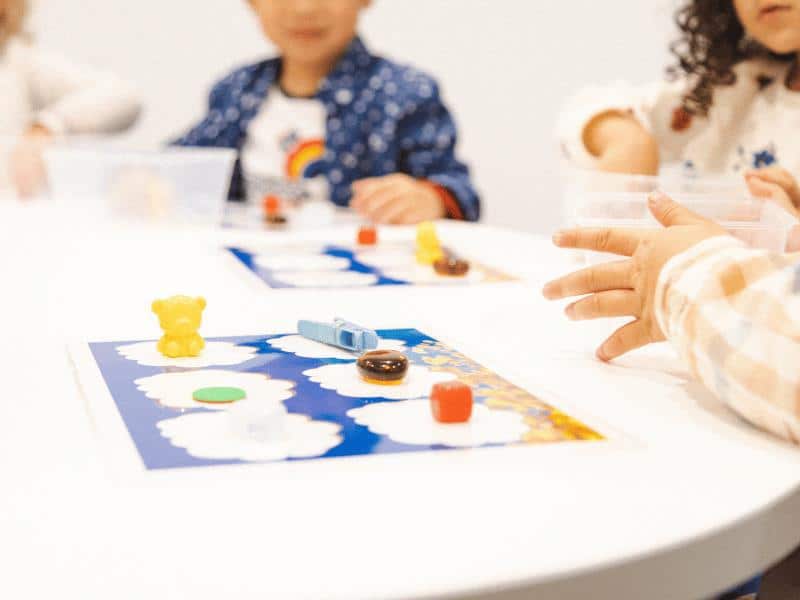
Photo by Shichida Australia: Fun and focused – memory games like these are designed to strengthen cognitive development in early childhood through playful, hands-on learning.
Support your child’s early brain development with the Shichida Method – a nurturing, research-backed program for children aged 6 months to 9 years.
At Shichida Australia, learning is fun, purposeful, and designed to bring out your child’s natural abilities. From memory and focus to creativity and emotional intelligence, we help your child thrive every step of the way.
Book a trial class today and see how early learning can shape a bright future.
FAQ:
Jean Piaget’s theory of cognitive development includes four main stages:
- Sensorimotor stage: Birth to 2 years
- Preoperational stage: Ages 2 to 7
- Concrete operational stage: Ages 7 to 11
- Formal operational stage: Ages 12 and up
Common signs of cognitive delays include limited speech, low curiosity, and difficulty following instructions or understanding social norms. If you have concerns, it’s best to consult a healthcare professional such as a paediatrician or psychologist.
Toys that support early cognitive development include board games, puzzles, matching games, building blocks, and pretend play sets.
To support healthy mental development, toddlers should have no more than one hour of high-quality screen time per day, ideally co-viewed with a parent or caregiver.
Cognitive development involves thinking, problem-solving, memory, and learning. Emotional development relates to recognising and managing emotions, building self-awareness, and forming healthy relationships.
Structured, age-appropriate programs that support memory, problem-solving, early language, and emotional development can promote healthy cognitive development in early childhood. Shichida early learning classes use a research-informed, play-based approach tailored for children aged 6 months to 9 years, focusing on strengthening these skills through fun games and activities.