Block Play and Child Development A Parent’s Guide
Block play might seem like simple fun, but it’s actually a powerful tool for helping your child’s early development. As toddlers and preschoolers build, arrange, and stack different shapes of blocks, they strengthen their fine motor skills and boost their cognitive and social development.
If you’re curious about block play child development and how it supports your little one’s learning journey, this article covers everything you need to know.
What Is Block Play?
Block play is a type of open-ended play – there are no rules or instructions to follow. Kids can use blocks however they like, whether that’s building a tall tower, creating a pretend world, or just exploring the different shapes.
Block play for toddlers often involves colourful, chunky blocks that encourage creativity and requires the use of imagination. Early activities might include mouthing or exploring the blocks, knocking them over, simple stacking, or using them to build a little house for their toys.
Types of Blocks Commonly Used in Early Childhood
What makes block play even more exciting is the variety of block types available—each one brings a different layer of fun and learning to your child’s playtime.
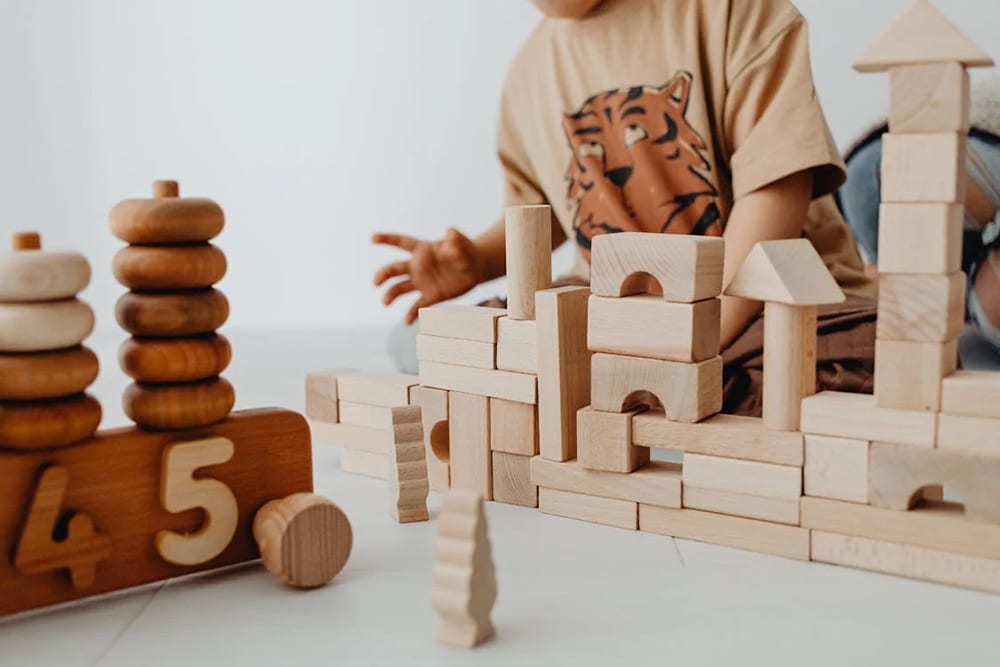
- Unit Blocks: These are solid wooden blocks that are great for toddlers and preschoolers. Their uniform size makes them easy to stack and build with, helping develop creativity, imagination, and self-expression.
- LEGO: These interlocking plastic bricks are better suited for slightly older toddlers and preschoolers. They help strengthen fine motor skills and encourage using problem-solving skills as children figure out how to piece them together.
- Soft Blocks: Made from foam or fabric, these are perfect for younger toddlers. They’re lightweight, safe, and ideal for exploring shapes and building without the risk of injury.
Why Block Play Is Considered Open-Ended Play
Block play is a great example of open-ended play because there’s no right or wrong way to do it – and no set rules to follow. Kids are free to build whatever they imagine: a tower, a house, a spaceship, or something completely unique. This kind of play gives them the freedom to make their own choices, solve problems, and experiment with ideas. It encourages imagination, builds independence, and helps them learn how to think creatively and confidently.
Developmental Benefits of Block Play
Block play isn’t just about fun – it also plays an important role in supporting your child’s development. Incorporating blocks into everyday play can provide a range of benefits across different developmental areas.
Fine and Gross Motor Skills
During block play, as they lift and arrange blocks, it also trains children’s motor development, especially fine motor skills. These actions help them to strengthen their hand-eye coordination, and balance as well as boost finger dexterity, essential for things like writing as they enter preschool.
Must try activities:
- Build a small block tower
- Use alphabet blocks for stacking and sorting
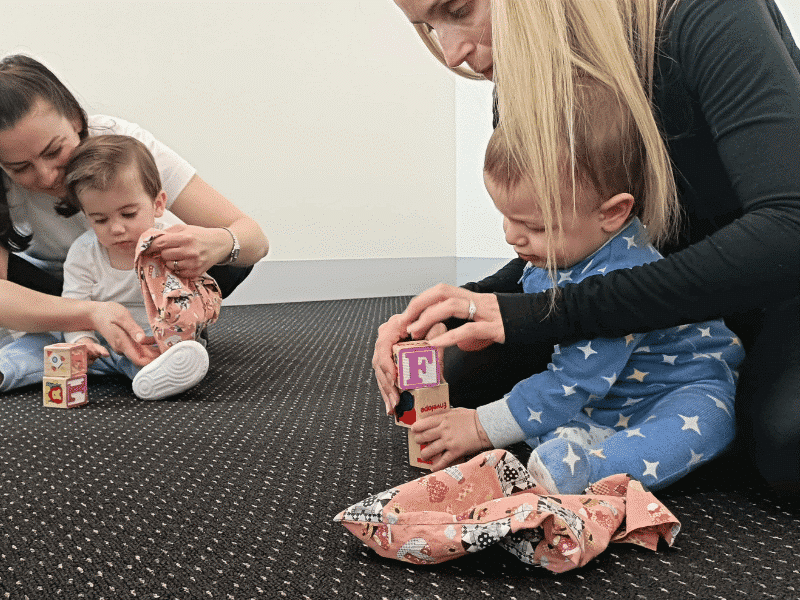
Photo by Shichida Australia: Block stacking is a great activity for babies to encourage fine motor skills and spatial awareness development.
Spatial Awareness and Problem-Solving
Through block play and even simple STEM play, kids begin to understand early concepts of gravity, stability, and cause-and-effect – like why a tower might fall if it’s too tall or uneven. These experiences also develop spatial skills and awareness, helping them understand size, shape, and positioning – early geometry and math skills in action.
Must try activities:
- Fit blocks together and pull them apart
- Play hide and seek with blocks behind furniture
Language and Communication Skills
Block play isn’t only physical – it also encourages verbal development. A 2023 study by Jiabyun Lyu found that block play supports social skills such as cooperation, communication, and negotiation. It can also expand vocabulary and storytelling skills, giving children opportunities to express their thoughts clearly – something that benefits them well into school and beyond.
Must try activities:
- Organise blocks alphabetically
- Create a story or scene using block arrangements
Social and Emotional Growth
Building blocks for kids, and the act of playing with blocks, supports emotional regulation and social development. Kids learn to take turns, share materials, and collaborate with peers. They also experience small frustrations – like when a tower falls – and learn perseverance and creative problem-solving. Over time, this builds resilience and confidence.
Must try activities:
- Role-play using block creations (e.g. building a zoo or city)
- Work in teams to build the tallest tower
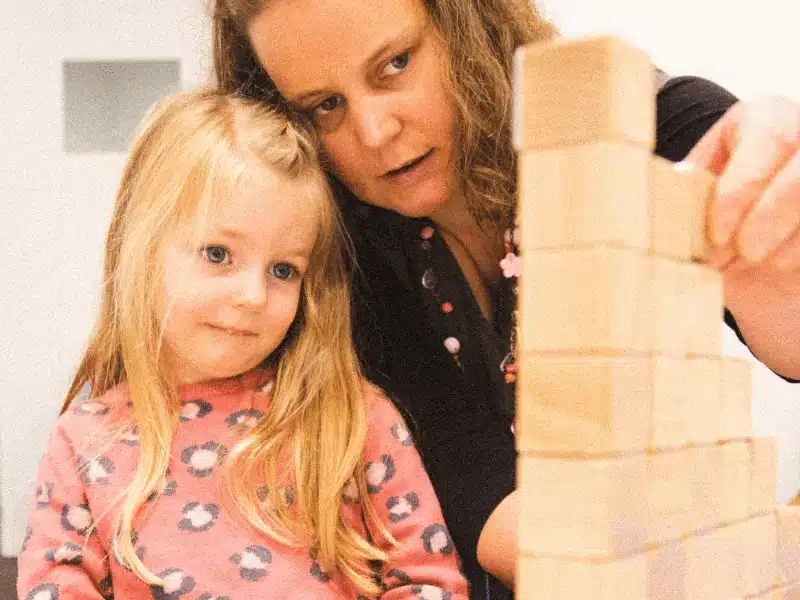
Photo by Shichida Australia: A preschooler completing a block-building activity with her parent during a Shichida class. Here they are doing an early math activity practicising basic addition.
How Block Play Supports Early Learning Areas
If you’re looking for a way to build your child’s early learning skills while keeping things fun, educational toys like blocks are a great choice. Here’s how block play can support key learning areas:
Early Math Concepts
What looks like simple stacking is actually an introduction to early math. Children begin to recognise shapes, count blocks, sort by size or colour, and even explore symmetry. These foundational skills are a great way to prepare your toddler for preschool learning.
Science Exploration
Block play naturally develops curiosity. Children experiment with balance, gravity, and cause and effect – figuring out what makes a structure stand or fall. These hands-on experiences lay the groundwork for understanding basic science concepts through trial and error.
Literacy and Storytelling
As kids build, they often name their creations or come up with little stories to go along with what they’ve made. While building a zoo, a castle, or a spaceship, they’re also developing vocabulary and descriptive language. This kind of pretend play supports early literacy and helps them organise and express their ideas.
Stages of Block Play by Age
This section will help you support block activities for babies, toddlers and preschoolers in a fun and age-appropriate way.
Babies (6 months – 1 year)
At this stage, it’s all about exploring! Babies enjoy reaching, touching, mouthing, and banging blocks together. Offer soft, lightweight blocks made from foam or cloth so they can safely grasp and explore. Focus on sensory play and basic interaction with the blocks – no building required just yet!
Toddlers (1–2 years)
Toddlers love to move and manipulate objects. Now’s a great time to introduce basic stacking activities, like piling one or two blocks on top of each other. They’ll enjoy knocking down towers, exploring how blocks feel, and starting to understand basic cause and effect (e.g., “If I push this, it falls!”). Keep the blocks large and easy to grip.
Preschoolers (3–5 years)
This is where block play really takes off. Preschoolers start building taller towers, creating bridges, and forming more imaginative structures like houses, castles, or zoos. They also begin to develop early pattern-making skills, problem-solving strategies, and storytelling abilities using their block creations. This is a fantastic age to combine block play with early math and spatial awareness games.
Block Play Activities to Try at Home
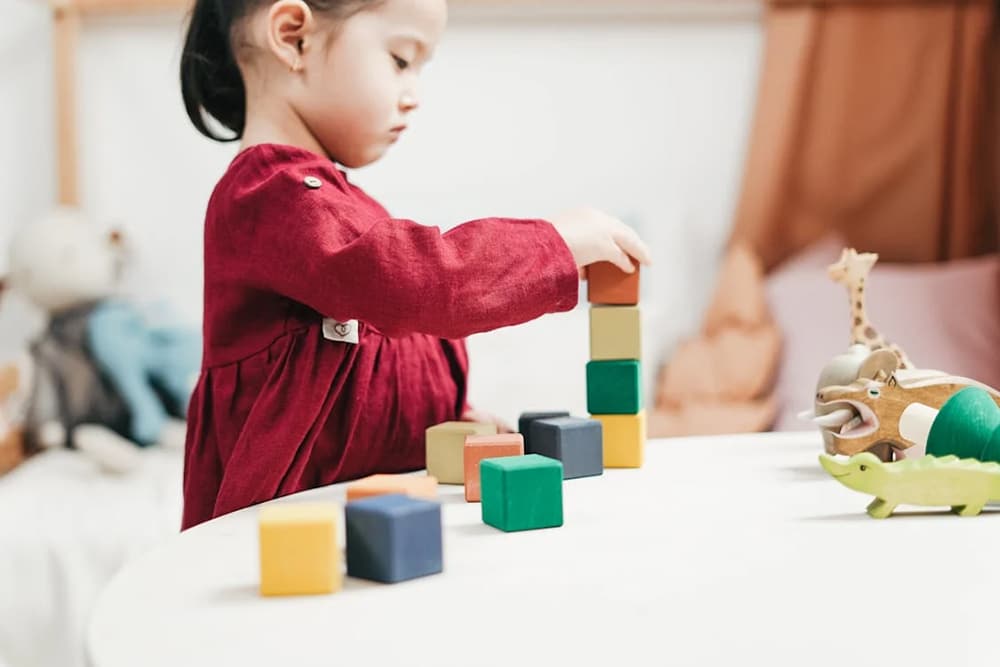
Toddler stacking blocks I Photo from Pexels
To support your child’s development through block play, here are a few simple and fun activities you can try at home:
Building a City or Zoo
Encourage your child to build a mini city or a zoo. This activity enhances creativity, helps with spatial planning, and lets them use their imagination to organise space and tell their own stories.
Materials:
- Building blocks
- Toy animals or cars
- A big surface or play mat
Colour Sorting and Matching
Sorting blocks by colour or size helps toddlers learn how to compare, classify, and recognise patterns. It’s a great way to support their visual processing and thinking skills.
Materials:
- Colourful building blocks
- Containers or trays for sorting
- Pen and labels (optional)
Storytime and Block Reenactments
After reading a favourite book, ask your child to recreate scenes or characters using blocks. It’s a playful way to connect reading with creativity and early literacy.
Materials:
- Storybook
- Building blocks
- Flat surface
- Character figurines (optional)
What the Research Says About Block Play
Block play is strongly backed by research and widely supported in early childhood education.
Long-Term Academic and Cognitive Benefits
Studies show that early block play can lead to greater academic success, particularly in areas like early math and spatial reasoning. When children build and experiment with blocks, they naturally practice problem-solving, planning and critical thinking skills. While they are balancing a tall block tower or figuring out how pieces fit together, they’re exercising essential cognitive abilities.
Endorsements from Educators and Early Learning Experts
Derry Koralek, former Chief Publishing Officer at NAEYC (National Association for the Education of Young Children), once said:
“Every classroom should have a full set of unit blocks, assorted props tied to children’s current interests and experiences, open storage shelves, and plenty of space and time to build and rebuild invented and familiar structures.”
This kind of environment encourages creativity, independence, and open-ended exploration – skills that are at the heart of early learning and lifelong success.
Tips for Parents to Encourage Meaningful Block Play
If you’re looking for simple ways to make block play more engaging and meaningful for your child, here are some practical parent tips for block play to help you get started.
Creating a Block Play Area at Home
You don’t need a huge space – just a soft mat or rug where your child can comfortably sit, crawl, and play. Having a dedicated area encourages curiosity, keeps them focused, and invites them to explore new ways of building.
Asking Open-Ended Questions During Play
Block play is the perfect time to build communication and critical thinking skills. Ask open-ended questions to encourage the use of their imagination and get them talking about their ideas. Try asking things like:
- “Tell me about what you’re building.”
- “What do you think will happen if we add one more block on top?”
- “How did you come up with that idea?”
Joining In vs Letting Them Lead
It’s great to give your child space to play independently, but it’s also okay to step in if they’re feeling stuck or frustrated. Offer support when needed, but avoid taking over. Letting them lead encourages creativity, builds confidence, and strengthens problem-solving skills naturally.
Final Thoughts: The Power of Play in Child Development
Block play might seem simple, but it plays an important role in early child development. It helps children build problem-solving skills, develop hand-eye coordination, improve social interaction, and strengthen creativity – all through play-based learning.
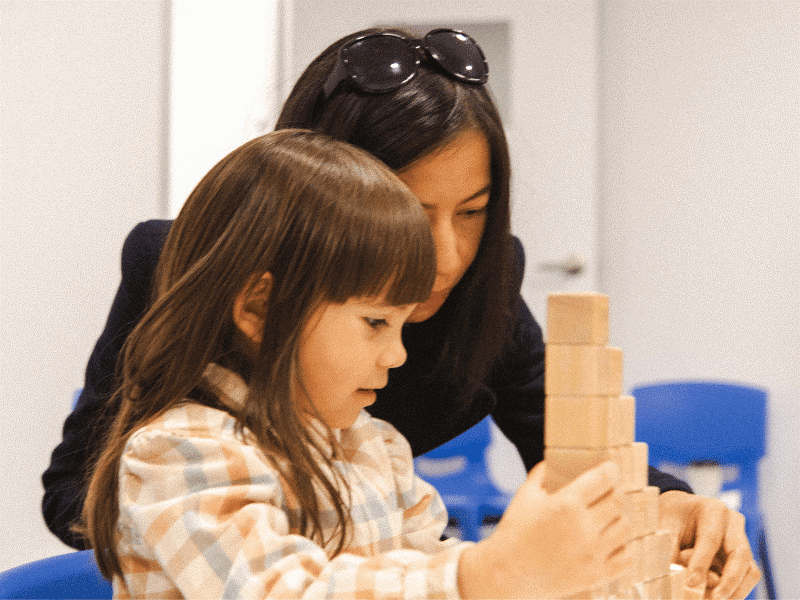
Photo by Shichida Australia: A preschooler is completing a fun block-building activity with her parent during a Shichida class. This activity encourages fine motor control, focus, spatial awareness and early math skills.
Curious how simple activities like block play can boost your child’s brain development? Shichida Australia uses purposeful play to build critical thinking, focus, and creativity from an early age. Give your little one a strong start. Book a trial class today and see the difference for yourself!
FAQs
Block play supports multiple areas of child development – physically, cognitively, and socially. It helps children improve their problem-solving skills, imagination, creativity, and self-expression.
Yes, block play is ideal for toddlers and offers a safe, engaging way to support early development. Soft blocks are especially suitable, helping reduce the risk of injury while encouraging safe exploration and play.
Block play encourages children to plan, experiment, and problem-solve. These activities strengthen memory, focus, and reasoning – key cognitive skills that support overall learning and school readiness.
Absolutely. Through block play, children develop fine motor skills, early math and science understanding, spatial awareness, and communication abilities – all of which contribute to school readiness.
The best blocks depend on your child’s age. Soft foam or fabric blocks are great for babies and young toddlers. As they grow, wooden unit blocks and interlocking blocks like LEGO become more appropriate and offer more complexity.