Learning Through Play: How Children Learn and Thrive
As a parent, you naturally want to help your child grow physically, mentally, socially, emotionally and academically. These days there are many ways to support their development. But do you know that you can start to effectively support them simply by playing with them? It’s called “learning through play”, and it has a very significant role in how your child will develop essential life skills.
The United Nations recognises play as a fundamental right of every child (in Article 31), highlighting its role in development and well-being.
What Is Learning Through Play?
Learning doesn’t always have to happen in a classroom or at a desk. One of the most effective ways young children grow and build essential skills is through something they already love to do – play.
Learning through play is a crucial part of your child’s development. It’s how they begin to make sense of the world around them. Through play, they explore, discover, and build meaningful skills. They learn at their own pace, form connections, and gradually develop important abilities such as cognitive, social, physical, and communication skills.
When your child builds a tower with blocks, they’re practicing math, balance, and problem-solving skills. When they pretend to be a doctor or chef, they’re learning language, empathy, and creativity.
Free Play vs. Structured Play
It’s important to understand that learning through play happens in two main forms:
- Free play is child-led. Your little one chooses what to play, how to play, and for how long. This type of play supports divergent thinking and emotional regulation.
- Structured play, on the other hand, is guided by an adult or follows certain rules. It might include board games, or an activity set up by a teacher or caregiver. This type of play helps children develop executive functioning and self-control.
Both are valuable for learning and growth. Educational philosophies like the Shichida Method support play-based learning because it encourages curiosity, independence, and hands-on discovery.
So next time your child is playing, remember that they’re not “just playing”, they’re learning in the best way possible.
Defining Play-Based Learning
Play-based learning is an educational approach that uses play activities for kids. According to the Early Years Learning Framework (EYLF) in Australia, play-based curriculum allows children to discover, create, improvise, and imagine. It provides opportunities for children to learn as they explore their environment, interact with others, and engage in meaningful experiences.
Educators play a crucial role by intentionally planning and creating environments that promote different types of play, thereby supporting children’s active engagement, problem-solving, curiosity, and creativity.
Types of Play in Learning
As a parent, it’s important to understand that play comes in many forms and each one plays a role in your child’s growth. Recognising the importance of play in child development, here are the main types of play and how each supports your child’s unique developmental journey:
Physical Play
When your child runs, jumps, climbs, or moves their body in active ways, they’re building strength, coordination, and motor skills. This kind of play supports their physical health. It also improves cardiovascular health, spatial awareness, and brain-body integration, which are essential for writing and classroom focus.
Social Play
Playing with others helps your child learn important social skills like cooperation, sharing, communication, and empathy.
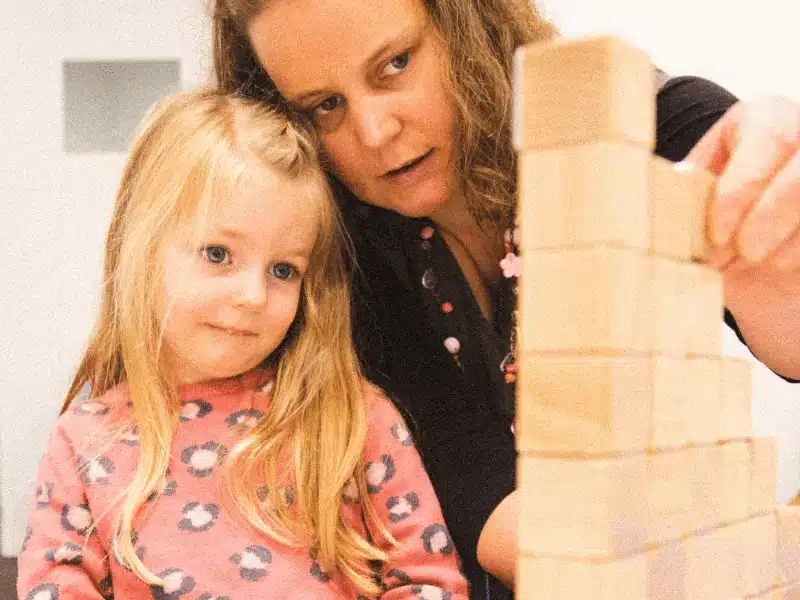
Photo by Shichida Australia: Constructive play activities like building with blocks help young children strengthen their hand-eye coordination, visual-spatial reasoning and patience.
Constructive Play
Play activities for kids like stacking blocks, or creating with art materials help your child develop problem-solving abilities and fine motor skills.
Symbolic (Pretend) Play
When your child uses their imagination to role-play or act out real-life scenarios, they are building language skills, creativity, and a better understanding of emotions and social roles. Research links pretend play to improved theory of mind, which helps children understand others’ perspectives.
Games with Rules
Board games and simple sports teach your child about fairness, taking turns, following rules, and managing emotions. These games support self-regulation and patience. Studies show that children who engage in games with rules regularly tend to show stronger executive function skills by school age.
Why Play Is Essential for Child Development
You’ve probably noticed that your child learns best when they’re having fun. Research shows a strong connection between play and development, as play supports every aspect of a child’s growth from thinking and talking to moving and building relationships with others.
Thus, play is not just leisure; it’s a vital part of development, particularly in the early years.
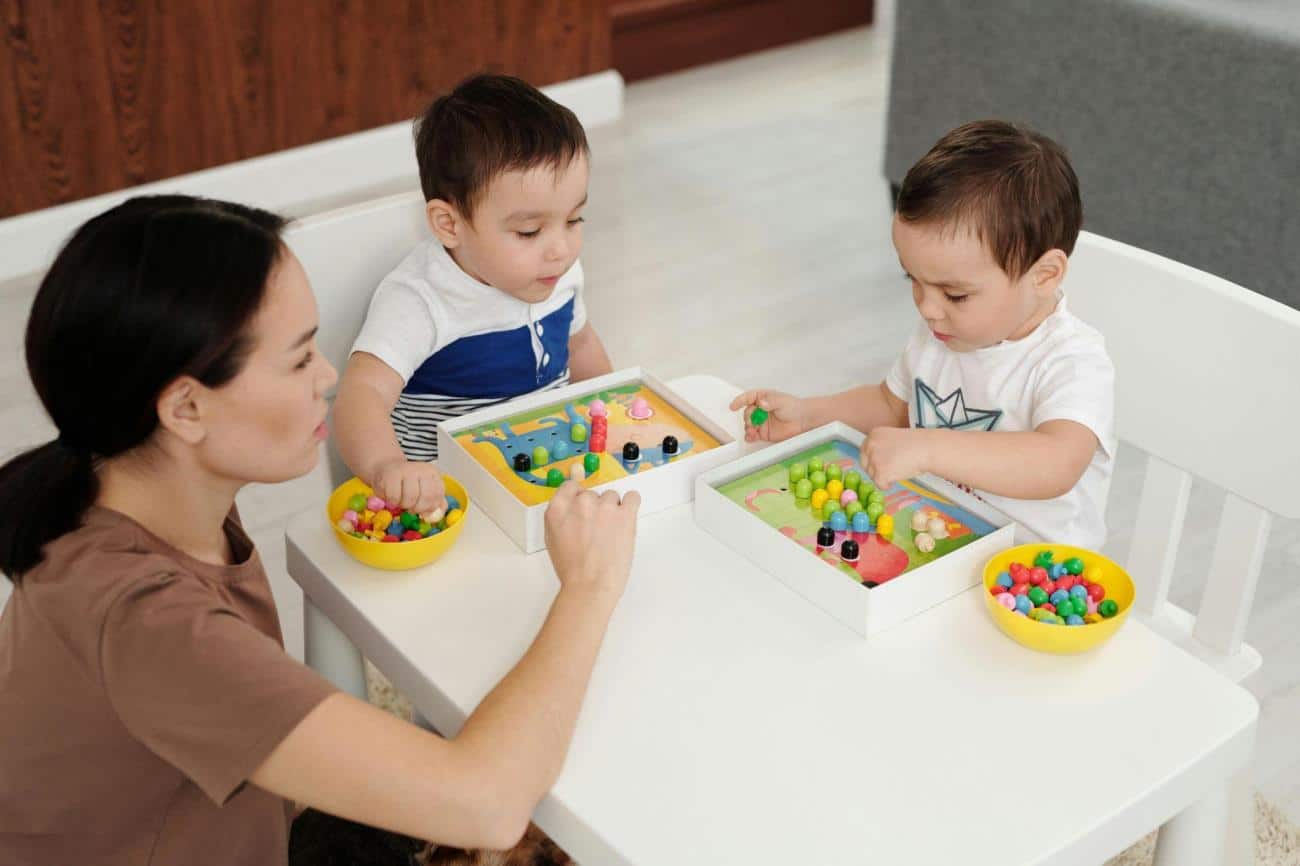
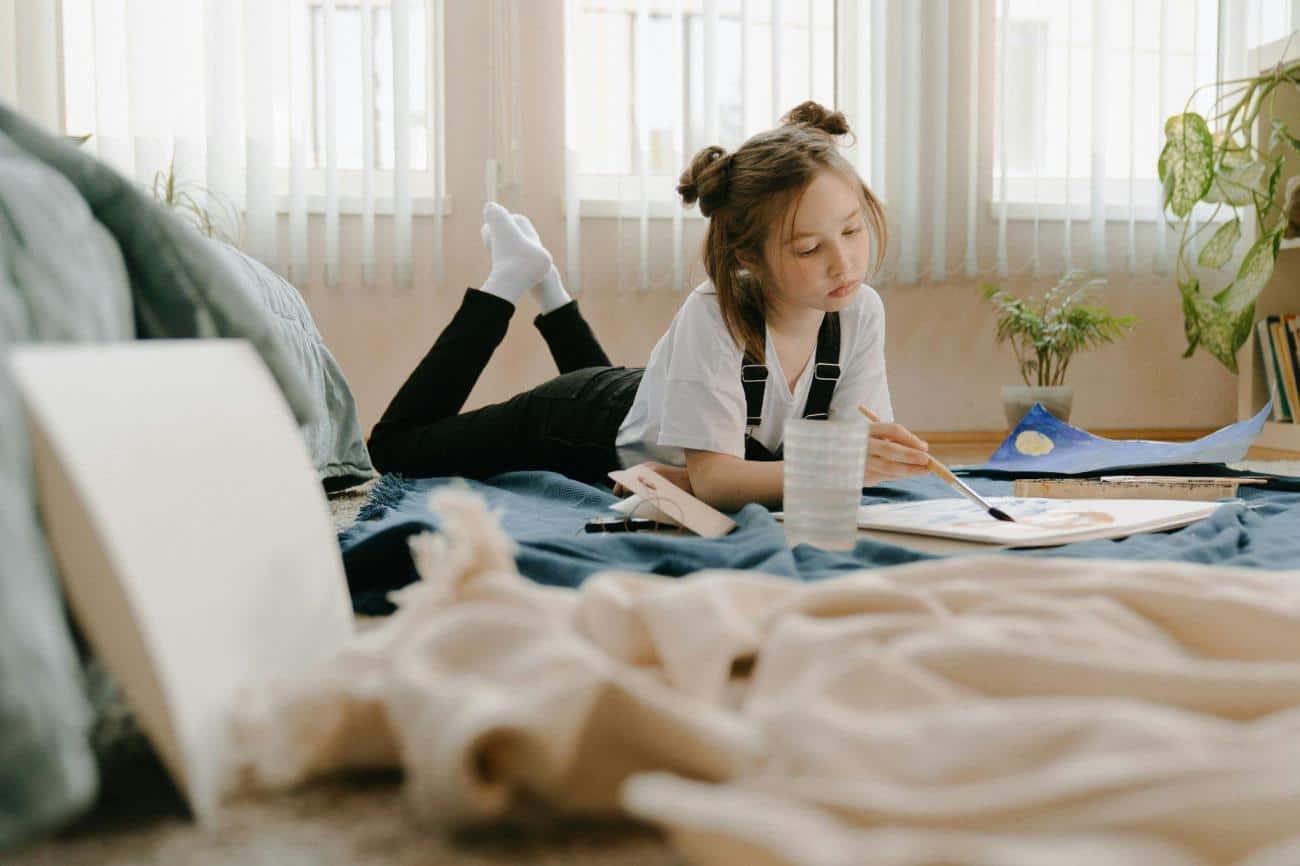
Photo from Pexels: Children can learn while having fun.
Cognitive Development
When your child plays, they’re also practising critical thinking, solvingproblems, and remember things. Simple games like matching cards or building block towers help strengthen memory, boost early math and reading skills, and encourage creativity. Talking during play also supports language development.
Pretend scenarios and games that involve planning also strengthen working memory and flexible thinking – key components of executive function.
Social and Emotional Development
Play is one of the best ways children learn how to relate to others. When your child shares toys, takes turns, or plays pretend, they learn how to express their feelings, understand others, and build empathy. These experiences help them develop strong social skills and emotional awareness.
Emotionally supportive play environments have been shown to reduce anxiety and increase emotional resilience in early learners.
Physical Development
Running, climbing, dancing, or even playing with small toys helps children build strong muscles and coordination. These play activities for kids support both gross motor skills (like jumping or balancing) and fine motor skills (like drawing or using scissors).
Motor skill development during early childhood is closely linked to later academic readiness, especially in handwriting and task focus.
Different Approaches to Learning Through Play
Play helps your child grow in all areas of development. Understanding the different ways children can learn can help you better support their learning at home through play.
Free Play vs. Guided Play
Free Play
This is play that your child chooses and controls. It builds creativity, independence, and problem-solving.
Guided Play
You set up an activity with a learning goal, but your child leads the way. For instance, setting out measuring cups for water play lets them explore while you gently support their learning.
Research shows that guided play can be just as effective as direct instruction in teaching academic content – especially when children are motivated.
Montessori, Reggio Emilia and Shichida Methods
Montessori
Montessori encourages hands-on, self-directed play in a carefully prepared environment. Children choose activities that build independence, focus, and real-world skills.
Montessori materials are designed to be self-correcting, helping children learn through trial and error without adult interference.
Reggio Emilia
This method focuses on exploration, creativity, and collaboration. Learning unfolds through child-led projects, often inspired by group art, nature, or real-world inquiries.
Children’s ideas are documented visually through drawings, photography, or displays, reinforcing their role as co-constructors of knowledge.
The Shichida Method
The Shichida Method blends guided learning with playful, whole-brain development activities. It introduces children to memory training, early literacy, early numeracy, music, and sensory stimulation in a joyful, structured environment.
Unlike Montessori and Reggio Emilia, Shichida lessons follow a consistent class rhythm led by trained teachers, with strong parental involvement to reinforce learning at home. This approach supports both cognitive and emotional growth, with a strong focus on developing empathy, intuition, and focus from a young age.
How Parents Can Support Learning Through Play at Home
You can support your child’s growth by creating a balance between screen-free, creative, and outdoor play. Spend time playing together, even briefly, and encourage outdoor play activities for kids.
Experts recommend at least 1–2 hours of active, screen-free play for young children each day to support optimal development.
Setting Up a Play-Friendly Environment
Create a safe, inviting space with open-ended materials like art supplies, and household items. Rotate toys to maintain interest and encourage exploration. Ensure the area is comfortable and accessible, allowing your child to engage independently and creatively. This setup promotes curiosity and supports various types of play.
Low shelves, baskets with labelled items, and a mix of textures and shapes encourage autonomy and exploration in early learners.
Simple Play-Based Learning Activities by Age
Toddlers (1–3 years): Engage in sensory activities like water play or exploring textures. Sing songs with actions to develop language and motor skills.
Preschoolers (3–5 years): Encourage pretend play, simple puzzles, and storytelling to enhance creativity and problem-solving.
Early School-Age (5–7 years): Introduce board games, basic science experiments, and art projects to support critical thinking and collaboration. At this age, children begin to link cause and effect more clearly, so hands-on experiments and structured rule-based games are especially impactful.
Learning Through Play in Childcare and Schools
In early childhood education, play is a fundamental approach to learning. Frameworks like Australia’s Early Years Learning Framework (EYLF) and the UK’s Early Years Foundation Stage (EYFS) emphasise that play-based learning supports children’s holistic development; cognitive, social, emotional, and physical.
Educators design structured environments where play is purposeful, ensuring children engage in activities that promote exploration, creativity, and problem-solving. This approach balances child-initiated play with guided experiences, fostering a love for learning in a supportive setting.
Role of Educators in Play-Based Learning
Educators are pivotal in facilitating play-based learning. They observe children’s interests and developmental stages to plan activities that align with curriculum goals. Through intentional interactions, educators support learning by asking open-ended questions, introducing new vocabulary, and guiding problem-solving. They also ensure each child’s learning journey is supported and extended appropriately.
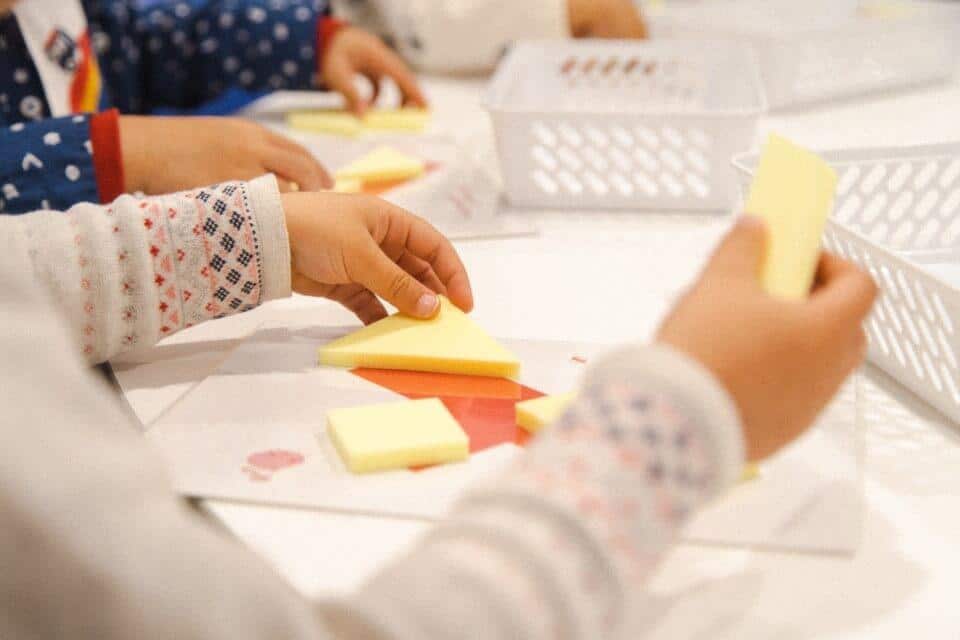
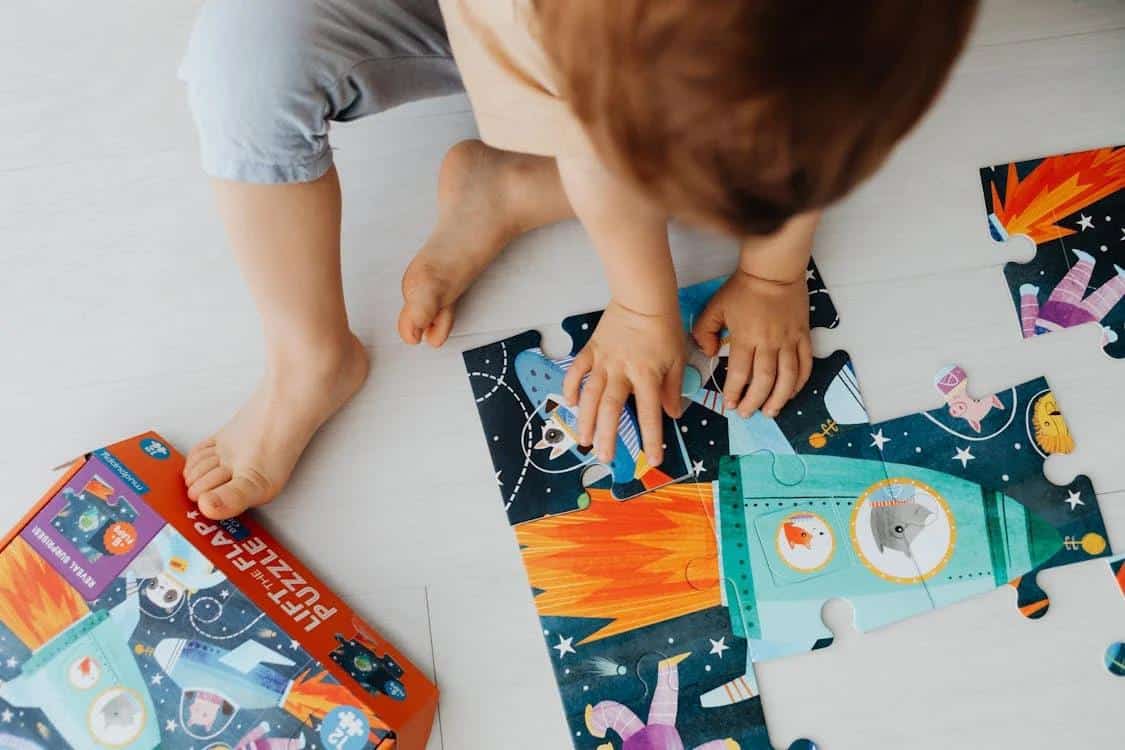
Photo by Shichida Australia: Hands-on puzzle games like these support spatial reasoning, focus, and problem-solving – key elements of play-based learning at Shichida.
Examples of Play-Based Programs
One standout example of effective play-based learning is the Shichida Method, which combines joyful, structured activities with brain-based techniques to support holistic development.
Shichida Australia offers a unique blend of guided play, memory training, numeracy and literacy games, music, and hands-on experiences that engage both hemispheres of the brain. With consistent routines and warm, interactive lessons, children build confidence, empathy, critical thinking, and strong communication skills – all through playful engagement.
Play-based learning in the Shichida Method supports sensory integration, focus, and emotional intelligence – skills essential for school and life.
Common Misconceptions About Play-Based Learning
Many parents believe that play is just fun and not a serious form of learning. However, research shows that play is a powerful tool for developing a wide range of skills in learners of all ages.
Myth vs. Fact
- Myth: Play is only for young children.
Fact: Play supports development at all ages, including adults. It develops creativity, problem-solving, and social skills. - Myth: Play isn’t real learning.
Fact: Through play, children explore concepts, test ideas, and build knowledge in meaningful ways. - Myth: Academic outcomes suffer with play-based learning.
Fact: Play-based approaches can enhance academic achievement by promoting engagement and deeper understanding.
A review in the journal Pediatrics concluded that play enhances brain structure and function and promotes executive function, which supports academic learning.
Source of Myth and Facts: Teaching English with Oxford
Benefits of Learning Through Play for Long-Term Development
Play is more than fun. It helps prepare your child for school and life. When your child plays, they build thinking skills, manage emotions, and learn to work with others. These early experiences shape how they handle challenges later in life. Long-term studies show that early play experiences contribute to academic success, emotional resilience, and strong interpersonal skills.
Researchers have found that play-rich early environments predict better outcomes in literacy, maths, and emotional regulation during primary school.
Building a Foundation for Lifelong Learning
Your child’s natural curiosity and love of play help them become confident learners. When they explore, pretend, and solve problems during play, they build habits that support learning throughout life. Early play supports focus, creativity, and a lasting love of learning.
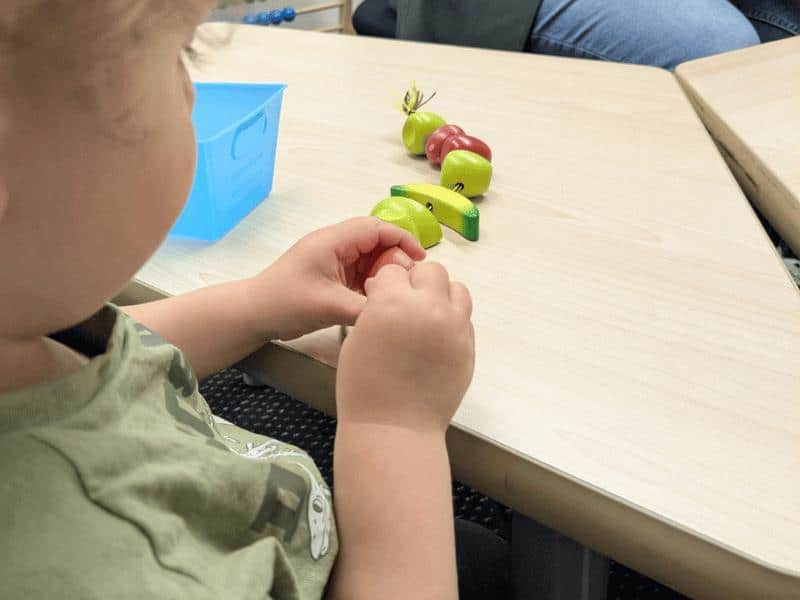
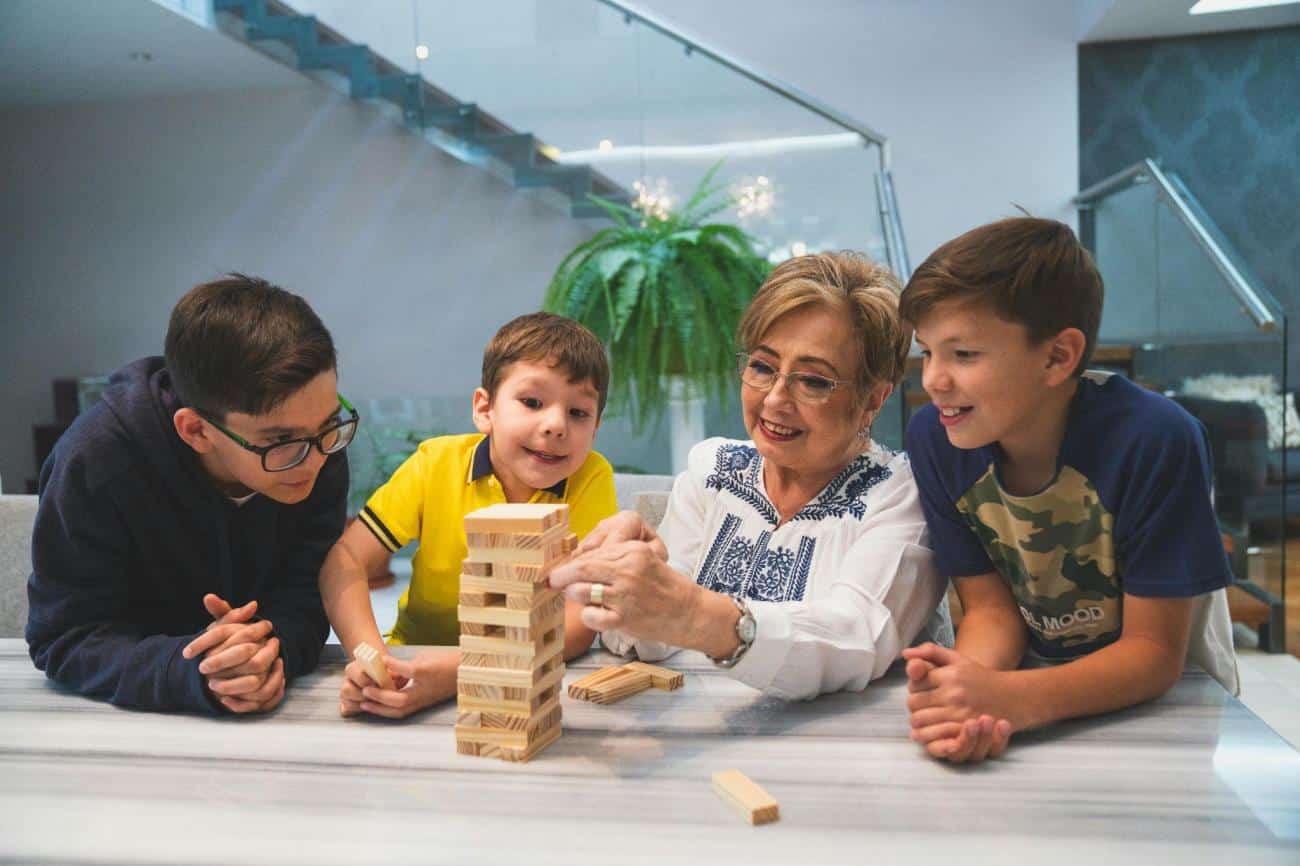
Photo by Shichida Australia: At Shichida, hands-on activities like this support focus, coordination, and confidence – helping every child thrive through play.
Make learning through play more exciting and fulfilling by exploring the programs offered by Shichida Australia
With efficient learning tools and age-appropriate activities, Shichida is one step ahead in engaging children and nurturing their full potential. Their unique approach combines fun with purposeful learning, helping your child grow smarter, more confident, and ready for life. Give your child the chance to thrive by embracing play as a powerful part of their development.
Book a trial class today and see the difference for yourself!
FAQs
It’s how children explore, discover, and build essential skills through play. Whether it’s pretending, building, or moving, your child is learning in a fun, natural way.
Play boosts thinking, memory, language, and problem-solving. It helps your child make sense of the world and supports emotional and social growth too.
Building with blocks, pretend play, puzzles, water play, and storytelling are all great ways for kids to learn while playing.
From birth. Even simple games like peek-a-boo help babies learn. Play evolves as your child grows. Newborns benefit from early interactions like eye contact, cooing, and gentle movement, which are early forms of social and sensory play.
Yes. Many early education programs follow play-based frameworks like EYLF (Australia) and EYFS (UK), where play is used to support learning across all areas of development.