Understanding Pencil Grip Development
A child’s growth and development don’t stop once they start walking or eating independently. There are still many milestones ahead, waiting to be explored and mastered. As parents, you naturally want to support your child’s journey and ensure they’re on track at every stage.
One important milestone in early handwriting development is pencil grip. While holding a pencil seems simple to adults, it’s a skill that toddlers need time to learn and refine.
Is there a right way – and a right time – to hold a pencil? Understanding the stages of pencil grip development can help you track your child’s progress.
In this guide, you’ll learn how pencil grasp stages unfold, what factors influence grip development, fun fine motor activities you can try at home, common grip issues and solutions, and helpful tools often recommended in occupational therapy to support handwriting readiness.
There’s no need to worry – with the right support, your child will progress naturally.
Introduction to Pencil Grip Development
Developing the correct pencil grip is an important part of your child’s fine motor development. It directly affects their academic skills, such as writing, drawing, and note-taking. A proper grasp reduces hand fatigue and allows the fingers to move freely and efficiently.
Pencil grip progresses through several developmental stages, from the initial palmar supinate grasp to the mature dynamic tripod grasp. Understanding these stages will help you support your child’s handwriting readiness and overall development.
The Stages of Pencil Grip Development
Palmar Supinate Grasp (12–15 months)
At this early stage, toddlers hold a crayon or pencil with their whole fist, known as a palmar supinate grasp. Movement comes from the shoulder, relying heavily on gross motor skills.
This is a normal part of development – it’s expected to see children scribbling with large arm movements rather than refined hand control at this age.
Digital Pronate Grasp (2–3 years)
Children begin holding a crayon or pencil with their fingers pointing downward, guiding the movement with their entire arm. This grip shows a shift from gross motor skills toward developing fine motor skills, although movement still comes mainly from the elbow. It’s a transitional stage where they are learning to stabilise their hand and gain better control.
Static Tripod Grasp (3.5–4 years)
In the static tripod grasp, children start holding the pencil with the thumb, index, and middle fingers. However, movement is still more rigid, coming from the wrist rather than the fingers.
While the pencil is now supported in a tripod formation, finger mobility is limited and pressure can be uneven. This stage is an important step toward building better pencil control.
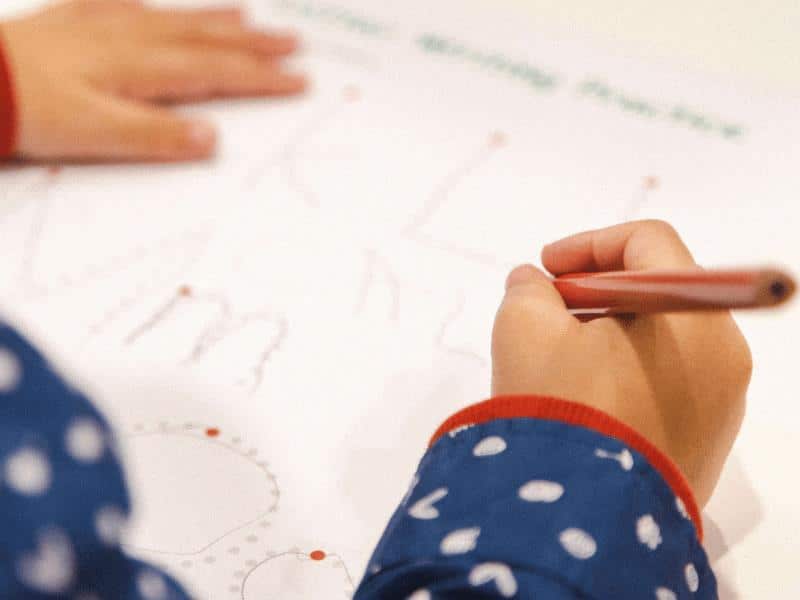
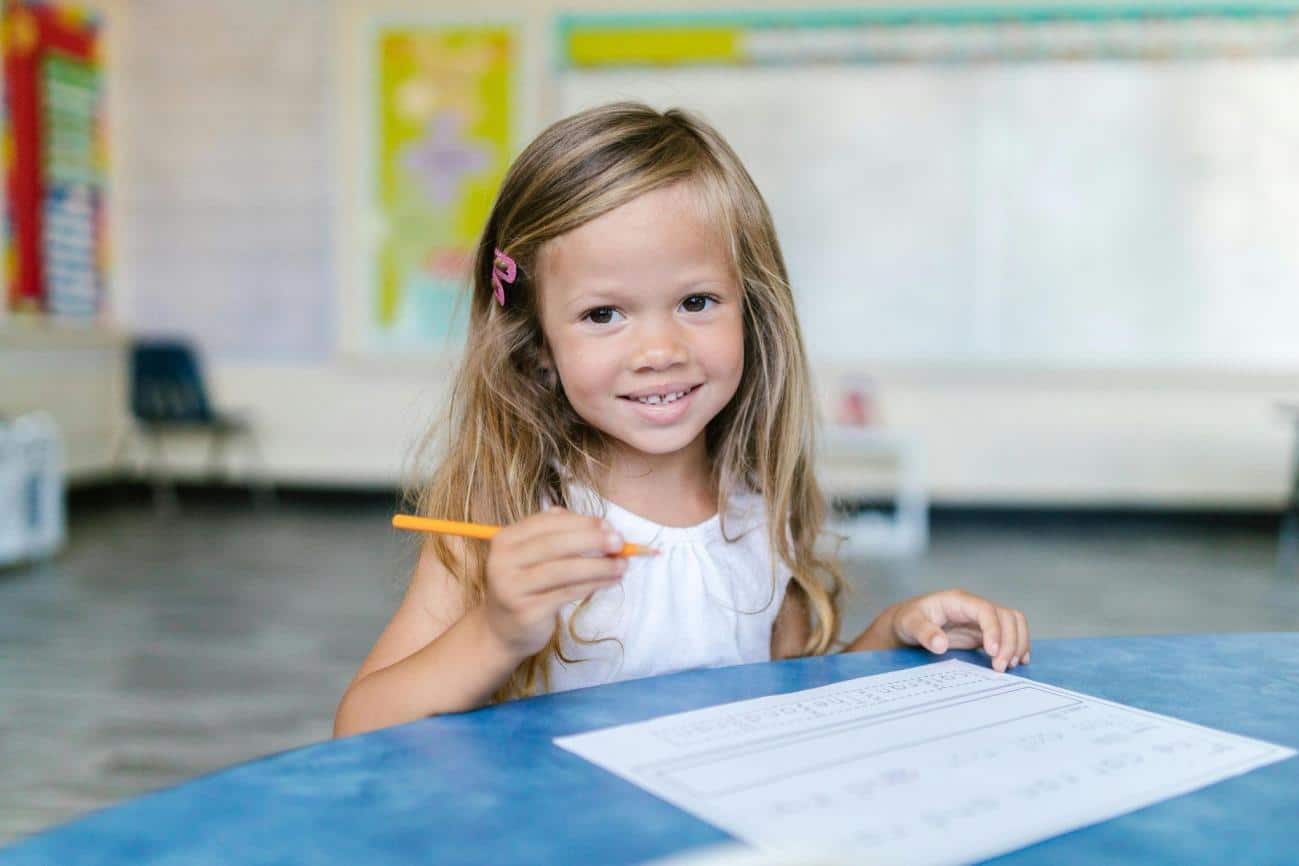
Photo by Shichida Australia: Preschoolers practise their tripod grasp through a range of activities in each Shichida class – starting with pincer grip practice as babies and progressing to a well-developed dynamic tripod grasp before starting school.
Dynamic Tripod Grasp (4.5–6 years)
The dynamic tripod grasp is considered the mature and most efficient way to hold a pencil. Here, the pencil rests against the middle finger and is guided by the thumb and index finger, with movement coming from the small muscles of the hand.
This grasp allows for smoother, faster, and more precise writing.
It’s important to note that while many children achieve this by around 6 years old, a fully refined dynamic tripod grasp may not be fully established until around 12 to 14 years of age.
Factors Influencing Pencil Grip Development
Several factors impact a child’s pencil grip development, including muscle tone, hand strength, and coordination.
Muscle Tone
Both low and high muscle tone can affect hand stability and endurance during writing. Children with low muscle tone may tire easily or have a floppy, unstable grasp.
Hand Strength
Strong hand and finger muscles are essential for holding and controlling a pencil. Without adequate strength, children may struggle to maintain a steady grip.
Fine Motor Coordination
Being able to move fingers independently is key for developing a mature grasp. It’s especially important for tasks that require precision and control.
Bilateral Coordination
Using both hands together-for example, holding a paper still with one hand while writing with the other – is a critical skill for handwriting readiness.
Everyday early childhood activities like climbing, building with blocks, and using tongs are excellent for strengthening these foundational skills.
Activities to Support Pencil Grip Development
Fine Motor Skill Activities
Watching your child write their name for the first time is a moment every parent treasures. Naturally, you want to support them as they develop this skill. Many early learning programs include structured games and hands-on activities that help strengthen fine motor skills needed for pencil grip. Shichida Australia, for example, offers a range of these activities across different age groups to support this important stage of development:
- Origami
- Threading
- Cutting shapes
- Drawing guided by songs
- Picking up small items using chopsticks
These activities strengthen the pincer grasp and build finger control and coordination, which are essential for holding a pencil with precision.
Gross Motor Skill Activities
Gross motor activities like crawling, climbing, and ball games play an essential role in developing strength and coordination. These movements help stabilise the body, laying the groundwork for fine motor control required for writing. Encouraging active play at home is a great way to help your child build the muscle strength and stability needed for an effective pencil grip.
Here are some helpful gross motor activities to try:
- Animal walks (bear walk, crab walk) – Builds upper body and core strength.
- Crawling through tunnels – Promotes bilateral coordination and body awareness.
- Throwing and catching large balls – Enhances shoulder and arm strength.
- Climbing playground equipment – Supports whole-body coordination and postural control.
- Wheelbarrow walking – Strengthens arms and core while supporting hand development.
Handwriting Practice Techniques
To support proper pencil grip, start with tools that make writing more comfortable for little hands. Adaptive tools like pencil grips, thick crayons or triangle pencils help children develop control and confidence. Begin with short, guided writing sessions, focusing on correct finger placement. Keep it positive and remain patient – consistent practice and gentle encouragement go a long way in improving handwriting over time.
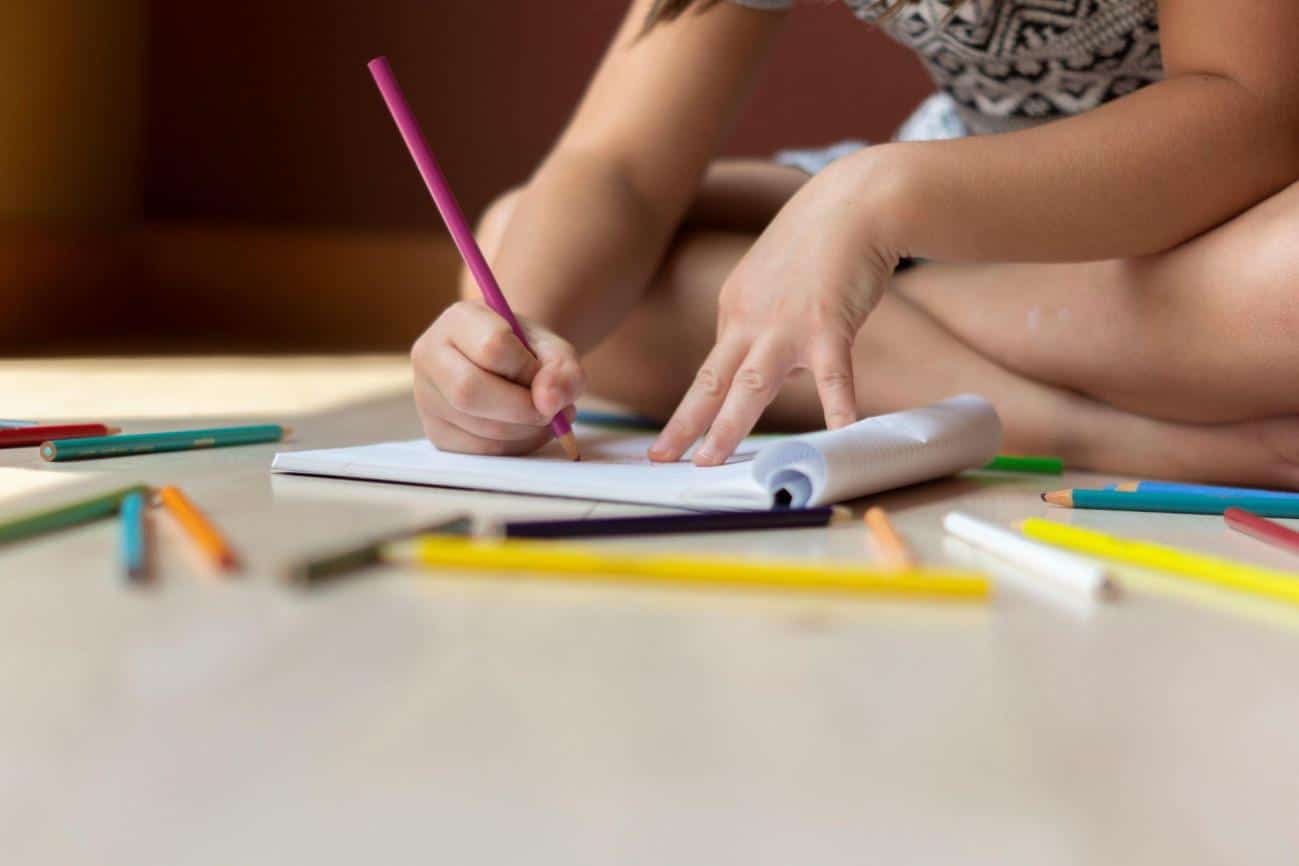
Photo from Pexels: Practice makes perfect
Developing a strong pencil grip doesn’t just prepare children for writing – it also supports early literacy. When kids are confident in holding and controlling a pencil, they’re more likely to enjoy drawing letters, writing their name, and exploring letter sounds, all of which are key components of early reading and writing success.
Identifying and Addressing Grip Issues
It’s normal for children to progress through different stages of pencil grip, but some signs may indicate that extra support is needed. Watch for:
- Hard-to-read handwriting
- Hand fatigue or cramping after short writing sessions
- Difficulty holding a pencil with the correct fingers (e.g., still using a fist grip past age 4-5)
- Poor pencil control, making writing feel awkward or tiring
If these issues persist past age 6, it may be time to consult a professional, such as an occupational therapist (OT). OTs are trained to assess and support children with fine motor challenges, and early intervention can make a big difference.
Tools and Resources for Parents

- Silicone Pencil Grips – Help guide fingers into the right position and reduce hand tension
- Triangular Pencils – Naturally encourage proper finger placement
- Thick Pencils or Crayons – Easier for small hands to control
- Writing Styluses – Some touchscreen styluses are designed to teach finger positioning and support grip development
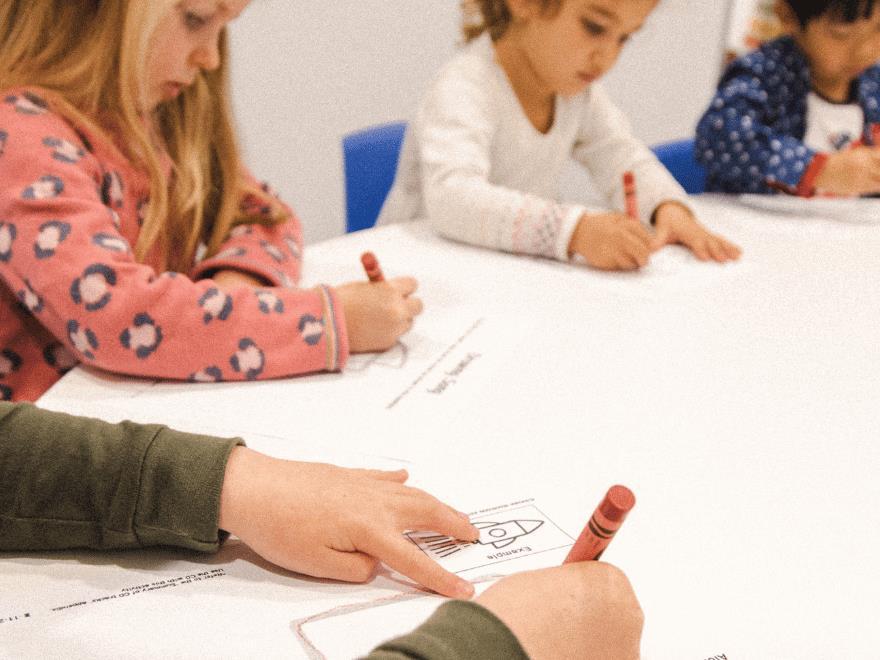
Photo by Shichida Australia: Preschoolers practise pencil control through fun guided drawing activities using crayons – an essential step in developing a confident and effective writing grip.
Want to support your child’s pencil grip development with expert guidance?
Shichida Australia offers age-specific classes – starting from baby and toddler levels – designed to strengthen fine motor skills through fun, hands-on activities. Every session is packed with purposeful games that help lay the foundation for writing success.
Book a trial class today and see how your child’s confidence and early writing skills can grow over time!
FAQs
Most children develop a mature dynamic tripod grasp between ages 5 and 6.
Look for a relaxed, three-finger hold using the thumb, index, and middle fingers, with controlled finger movement rather than arm movement.
Activities like threading, origami, drawing, clay play, and using tongs help build hand strength and fine motor coordination.
Yes, specially designed silicone or molded grips can guide fingers into the correct position and improve writing comfort and control.
If your child continues to struggle with holding a pencil or shows signs of fatigue, frustration, or poor control beyond age 6, it may be helpful to speak with an occupational therapist.