

Scissor Skills Development: The Essential Guide
Many parents feel uneasy about letting their child handle scissors.
They can seem dangerous, and when it comes to young children, anything even slightly risky often feels off-limits. But with the right approach, children can learn to use scissors safely—and in doing so, build essential developmental skills.
Yes, scissor skills development is real. It’s a valuable part of early childhood that helps strengthen fine motor control, improve hand-eye coordination, support bilateral movement, and even lay the foundation for pre-writing.
This essential guide will walk you through everything you need to know to support your child’s cutting journey – from why scissor use matters, to key milestones, fun scissor activities, common challenges, and how to choose the right child-safe scissors. It’s all about helping children grow in confidence, independence, and skill – one snip at a time.
Importance of Scissor Skills Development
Scissor skills are more than just cutting paper. They play an important role in your child’s overall growth and development. A child who learns to cut is also improving their fine motor skills, strengthening hand muscles, and building hand-eye coordination.
These skills prepare children for school tasks like writing, drawing, and following instructions. Beyond physical growth, mastering scissor use also builds confidence, patience and independence, making it a valuable part of your child’s holistic development.
Supporting scissor skills development at home can be as easy as offering child-safe scissors and guided cutting activities.
Fine Motor Skills Development
Using scissors strengthens the small muscles in your child’s hands, fingers, and wrists – essential for tasks like writing, buttoning, and using utensils. It also sharpens bilateral coordination, as one hand guides the paper while the other cuts.
Scissor skills development is closely linked to fine motor control and should be introduced with age-appropriate materials. Simple activities like cutting playdough, paper strips or magazine pictures are great for improving grip strength and control.
Cognitive and Academic Benefits
When your child uses scissors, it requires focus, decision-making and hand control, which helps develop cognitive skills like concentration and problem-solving.
These cutting activities also support pre-writing skills by teaching children to follow lines, judge spacing and control pressure – building a strong foundation for future classroom success.
Scissor Skills Developmental Milestones
Understanding the typical milestones for scissor skills development can help parents, caregivers, and educators provide the right support at the right time.
Milestones at Age 2–3
Between the ages of 2 to 3 years, children start experimenting with scissors. Introducing scissors during toddler years, under supervision, is a safe and effective way to encourage early scissor skills. By about age 2.5 years, most can open and close scissors using two hands or begin cutting paper using one hand.
Developing scissor skills in early childhood helps children build hand strength, coordination, and focus. Simple activities like cutting playdough or making fringe on paper help build grip strength and hand control. Spring-loaded or plastic safety scissors are ideal at this stage and close adult supervision is essential, as toddlers are still learning to coordinate both hands.
Source: Growing Hands-On Kids
Milestones at Age 4–5
By ages 4 to 5, children typically have more accurate and controlled cutting skills. They can cut along straight and curved lines and begin working with basic shapes like circles and squares.
Preschool scissor activities are a fun and effective way to support scissor skills development at home or in class. Activities like cutting zigzags, curves or simple craft templates help strengthen bilateral coordination and fine motor control. This is a great time to introduce guided cutting tasks using thicker paper or card stock, which offers more stability as they refine their grip and scissor precision.
Source: Building Blocks Therapy
Milestones at Age 5–6
By ages 5 to 6, children typically show greater independence and confidence when using scissors. They can cut intricate shapes, trace complex patterns and complete multi-step cutting activities with ease.
Improving scissor skills takes time and practice, especially during the foundational stages of child development. At this stage, they’re using a more mature scissor grip and making smooth, precise cuts. These skills are important for school readiness, supporting tasks like writing, drawing and project work.
You can encourage continued progress by offering craft activities that involve tracing, cutting and basic construction.
Source: PLD Literacy
Recommended Scissor Activities for Skill Development
Learning to use scissors doesn’t need to be complicated – it just needs to be consistent, fun, and matched to your child’s developmental stage. The following child development activities support cutting skills through playful practice, while also building fine motor strength, hand-eye coordination and confidence.
Beginner Scissor Activities
As children master early scissor skills, they gain confidence and independence in everyday tasks. When working with young toddlers who are just starting to learn scissor skills, safety and simplicity come first. Use spring-loaded or plastic safety scissors and choose materials that are firm but easy enough to cut.
- Snip Strips: Cut 1-inch-wide strips of coloured paper and let your child snip small pieces along the edge.
- Playdough Cutting: Roll playdough into “snakes” and have your child cut through them – great for strengthening little hands.
- Fringe Practice: Draw a line of dots near the edge of a sheet of paper and guide your child to make small snips to create a fringe.
Safety Tips: Always supervise. Use child-safe scissors, and teach proper scissor posture – thumbs up, elbows in.

Photo from Pexels: Practicing with scissors helps build steady cutting skills and supports scissor skills development over time.
Intermediate Scissor Activities
Simple crafts that involve snipping or cutting shapes contribute significantly to developing scissor control in young learners. For children aged 4 to 5, it’s time to introduce activities that require greater coordination, control and attention to detail.
- Line Cutting: Draw straight, curved, or zigzag lines on paper and have your child cut along them.
- Shape Cutting: Invite them to cut out pre-drawn shapes like circles, triangles and squares. Use thicker paper or cardstock to make it easier to grip and cut.
- Build-a-Picture Crafts: Let your child cut out basic shapes (like a sun, cloud, or house) and glue them onto a background to create a full picture.
Pro Tip: These activities promote bilateral coordination, as children need to use one hand to hold and rotate the paper while the other hand cuts.
Advanced Scissor Activities
Scissor cutting skills are a foundation for future writing ability, as both require hand strength and precision. For children aged 5 to 6, introduce more intricate cutting projects that encourage accuracy, creativity, and imagination.
- Cutting Around Details: Provide templates with shapes like animals or cartoon characters and guide them to cut around the edges carefully.
- Paper Doll Chains: Teach your child how to fold and cut linked dolls or shapes – great for showcasing cutting precision and symmetry.
- Theme Crafts: Create seasonal or holiday-themed crafts like snowflakes, pumpkins or stars that involve cutting folded or patterned paper.
These activities help refine fine motor skills, preparing children for more advanced tasks in writing, art and school projects involving scissors.
Try This Product: The Scissors Training Workbook is a carefully crafted resource that helps children improve scissor handling while boosting creativity, dexterity and focus.
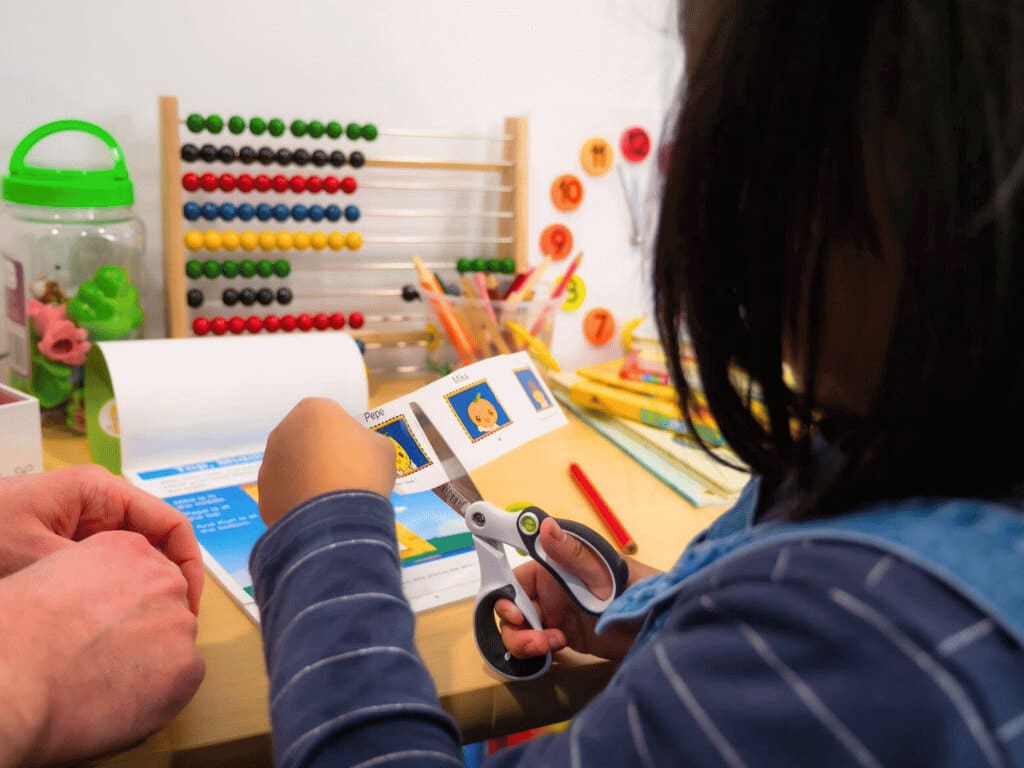
Photo by SHICHIDA at Home: Scissor cutting is just one of the many fun, hands-on activities in their workbooks that support scissor skills development.
Try This Learning Program: SHICHDA at Home offers a holistic early learning program for home use, which includes printable workbooks, videos, songs and flashcards. The workbooks are perfect for practising fine motor skills like pencil grip and scissor cutting.
Common Challenges and Solutions
Scissor skills development begins with simple tasks like snipping paper strips and gradually progresses to more complex cutting shapes.
Many children experience a few bumps along the way when learning scissor skills. From weak grip strength to coordination struggles or safety concerns, each challenge has simple, practical solutions that can help your child become more confident, capable and safe while cutting.
Grip and Hand Strength Issues
A poor grip can make it difficult for children to hold and squeeze scissors properly. Building hand strength is key to improving control and endurance.
- Use Squeeze Tools:Spray bottles, tongs, and stress balls are fun ways to develop hand strength through pressure-based play.
- Cut Playdough or Straws:These materials offer gentle resistance, helping children gradually build grip strength without frustration.
- Scissor Adaptations:Try loop scissors or spring-loaded scissors that reopen after each snip to reduce hand fatigue and support developing muscles.
Coordination Difficulties
Bilateral coordination – using both hands together – is essential for cutting. One hand holds the paper while the other does the cutting and building this coordination takes practice.
- Tearing Paper:Tearing paper into strips strengthens hand coordination and prepares children for scissor use.
- Threading and Beading:Activities like lacing cards or threading beads help both hands learn to work together smoothly.
- Guided Cutting:Offer hand-over-hand support, or draw large lines and arrows on the paper to guide movement while cutting.
Safety Concerns
Scissors can seem unsafe at first, but teaching safety early helps turn hesitation into confidence.
- Select Age-Appropriate Scissors:Use blunt-tip, plastic or spring-loaded scissors specifically designed for young children.
- Create a Cutting Station:Set up a small, clutter-free table just for cutting. Remind children to never run, stand, or walk while holding scissors.
- Teach Proper Technique:Emphasise the “thumbs-up” grip (thumb in the top hole), a seated position, and staying focused while cutting.
Choosing the Right Scissors
Selecting the right children’s scissors plays a key role in supporting the development of cutting skills and fine motor control. Different types of scissors suit different stages of development.
- For beginners, loop scissorsare a great starting point. They don’t require fingers to go through handles and spring open after each snip – ideal for children still building hand strength.
- Spring-loaded scissorsfunction similarly and are especially helpful for children with limited coordination.
- As skills improve, children can transition to blunt-tip training scissorswith handle guides to support proper finger placement.
The right pair of scissors promotes safety, control, and more effective skill-building.
Choose the Right Support
Shichida Australia takes a holistic approach to early learning – focusing not just on what children know, but on the essential skills they build along the way.
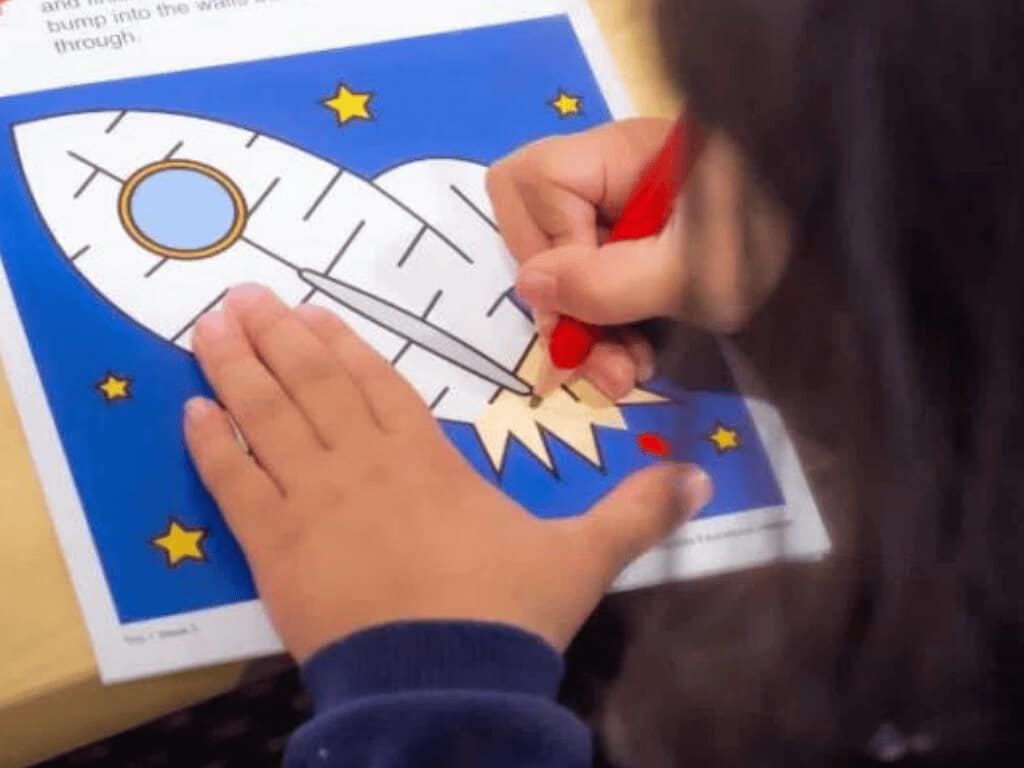
Photo by Shichida Australia: Completing mazes is a great way to strengthen hand muscles and support scissor skills development through controlled pencil movement.
Fine motor development is an important part of the program, supported through engaging activities like paper folding, chopstick practice, scissor cutting, pencil grip practice and more. These hands-on experiences help children develop coordination and control through fun games and activities.
Ready to see it in action? Book a trial class today and experience how Shichida makes learning fun, engaging and effective for your child’s development!
FAQs
Children can begin practicing with scissors around 2-3 years old. At this age, they can use safety scissors to practice basic snipping, building confidence and hand-eye coordination.
To help your child hold scissors correctly, encourage the “thumbs-up” grip with the thumb in the top hole and the index and middle fingers in the bottom. Ensure they are seated comfortably and using a controlled cutting motion.
Yes, left-handed scissors are important for left-handed children, as they are designed to suit their natural hand orientation, preventing strain and promoting more effective cutting.
Signs that your child may be struggling with scissor skills include difficulty holding scissors properly, trouble cutting along lines, and frustration during cutting activities due to lack of control or coordination.
Daily scissor practice should ideally last 5-10 minutes to keep the child engaged and focused without becoming frustrated or fatigued. Consistency is key to improvement
If your child is uninterested in scissor activities, make it fun by incorporating bright colours, creative materials or turning the activity into a game. Pairing cutting tasks with other enjoyable crafts can also increase engagement
Yes, alternatives like playdough, straws or fabric are excellent materials for scissor practice, providing variety and making the activity more enjoyable while building hand strength.
Ensure scissor safety by using age-appropriate tools like blunt-tip or spring-loaded scissors, setting up a safe cutting environment, and always supervising your child during cutting activities.