Spatial Awareness Enhancing Your Child’s Development
As your child grows, they reach important developmental milestones that support their learning and independence. One key area of growth is spatial awareness – the understanding of where objects (and their own bodies) are in space.
As a parent, you can play a powerful role in nurturing this skill during early childhood.
This article will guide you through the concept of spatial awareness, its benefits, and practical ways to help strengthen your child’s spatial abilities through everyday activities and play.
What is Spatial Awareness?
Spatial awareness is your child’s ability to understand and respond to the space around them. Everyday actions like picking up toys, using a spoon, or walking through a room all involve this skill.
Supporting spatial awareness in early childhood helps children move confidently and safely through their environment, improving their ability to complete daily tasks and interact with the world.
Simple activities that help develop this skill include crafts like drawing and colouring, block play, board games and physical activities or sports.
Spatial Awareness Definition and Basics
Also known as body awareness in early childhood, spatial awareness is the ability to understand your surroundings and your position within them. While children aren’t born with fully developed spatial skills, these abilities begin to form from birth and can be nurtured over time.
With strong spatial awareness, a child can judge distance, understand direction, and grasp concepts like size and shape. These skills come into play during everyday tasks such as solving puzzles, stacking blocks or buttoning clothes.
Why Spatial Awareness Matters for Kids
When it comes to your child’s development, how they interact with their surroundings plays a key role – and spatial awareness is a big part of that. It helps them understand how their body and objects relate to the space around them.
As children grow, strong spatial skills support their ability to visualise concepts in learning, move with greater coordination during play, and navigate social interactions with more confidence.
Developmental Stages of Spatial Awareness
Spatial awareness isn’t something children are born with – it develops gradually over time. Below are the key stages in your child’s early development to help you understand what to expect and how to support their progress.
Ages 0-2 Years: Early Sensory Exploration
From birth, babies begin developing spatial awareness through sensory experiences – starting with visual tracking, grasping nearby objects, and responding to movement. In these early months, they explore space mostly with their eyes and hands.
As they approach toddlerhood, around 12 to 24 months, toddlers begin to move independently – crawling, pulling up and walking. This mobility gives them new ways to interact with their environment, like reaching for distant toys, navigating around furniture and exploring how objects relate to each other in size, shape and orientation.
Ages 3-5 Years: Developing Spatial Skills Through Play
Between the ages of 3 and 5, preschool-aged children begin engaging in more complex activities such as building structures, completing puzzles, and replicating patterns. As they explore the world with curiosity and creativity, they start to navigate familiar spaces with ease, recognise familiar faces, and develop an understanding of left and right.
During this stage, play becomes a powerful teacher. Through games and hands-on experiences, they begin to use spatial language naturally – words like under, behind, near, and far – as they describe and interact with their environment.
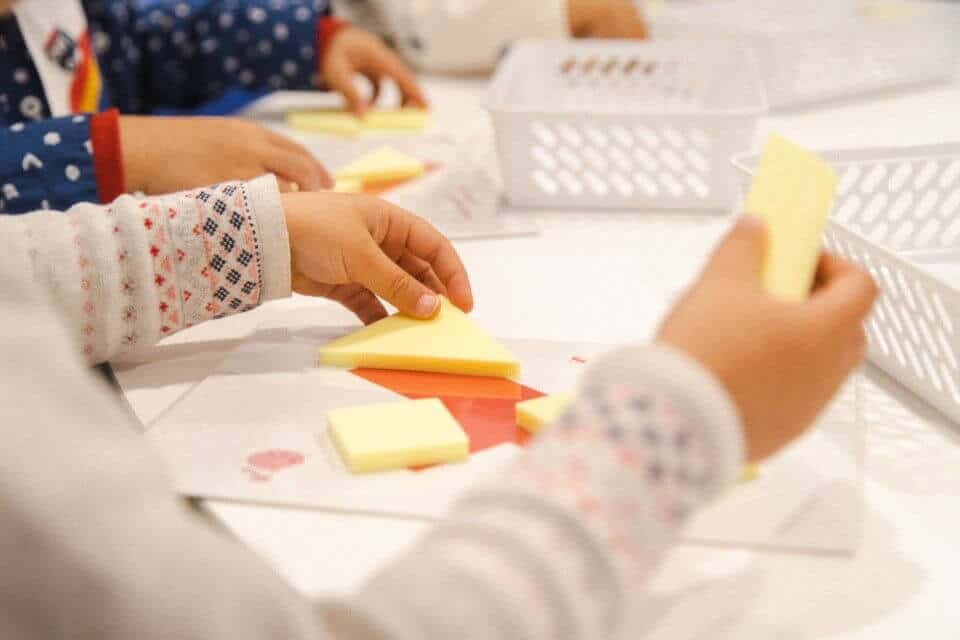
Photo by Shichida Australia: Preschoolers solving a fun 3D Tangram puzzle challenge. This activity develops critical thinking, fine motor control, pattern recognition and spatial awareness.
Ages 6-9 Years: Refining Spatial Skills in Early Education
Between the ages of 6 and 9, school-aged children begin to refine spatial skills through structured learning and hands-on activities in school. Tasks like arranging objects in patterns, solving puzzles, using rulers and identifying shapes in geometry help them better understand how things relate to one another in space.
They also start grasping more advanced concepts like symmetry, measurement and basic 3D construction, which play a key role in subjects like maths, art and science. Strengthening these skills at this stage supports cognitive development and lays the foundation for academic success in later years.
Recognising Spatial Awareness Challenges
Although spatial awareness naturally develops as your child grows, some children may experience spatial challenges along the way. Identifying these early signs can help you offer the right support and encouragement to strengthen these skills over time.
Common Signs of Spatial Awareness Difficulties
Here are some signs that may indicate your child is experiencing challenges with spatial awareness:
- Struggles to organise objects like toys or books
- Frequently bumps into furniture or has trouble navigating familiar spaces
- Difficulty completing puzzles or playing with building blocks
- Often bumps into people or invades personal space
- Misses social cues, such as when someone steps back or changes position
When to Seek Professional Support
If your child’s spatial challenges are noticeably affecting their everyday activities – such as walking, playing, socialising, or learning at school – it may be time to seek professional guidance. Early intervention can make a meaningful difference.
Professionals who can assess and support your child include an occupational therapist, physical therapist or child psychologist, depending on the nature of the concerns. These experts can help identify specific needs and provide targeted strategies to support your child’s development.
Practical Activities to Develop Spatial Awareness at Home
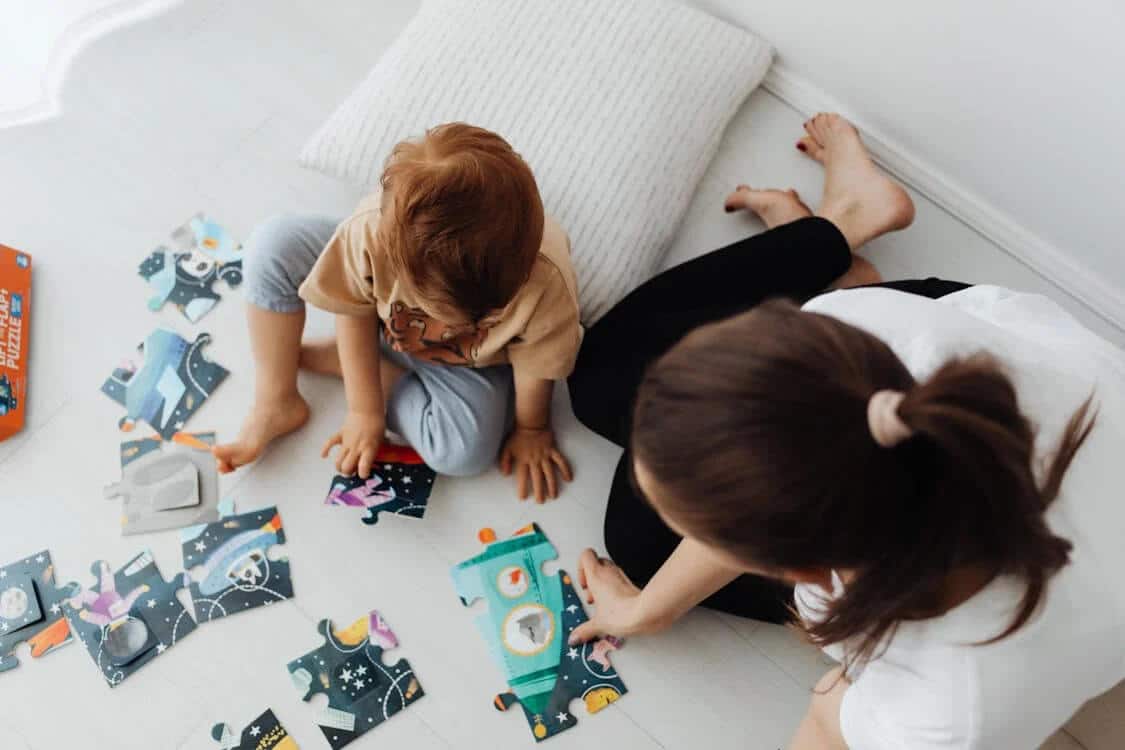
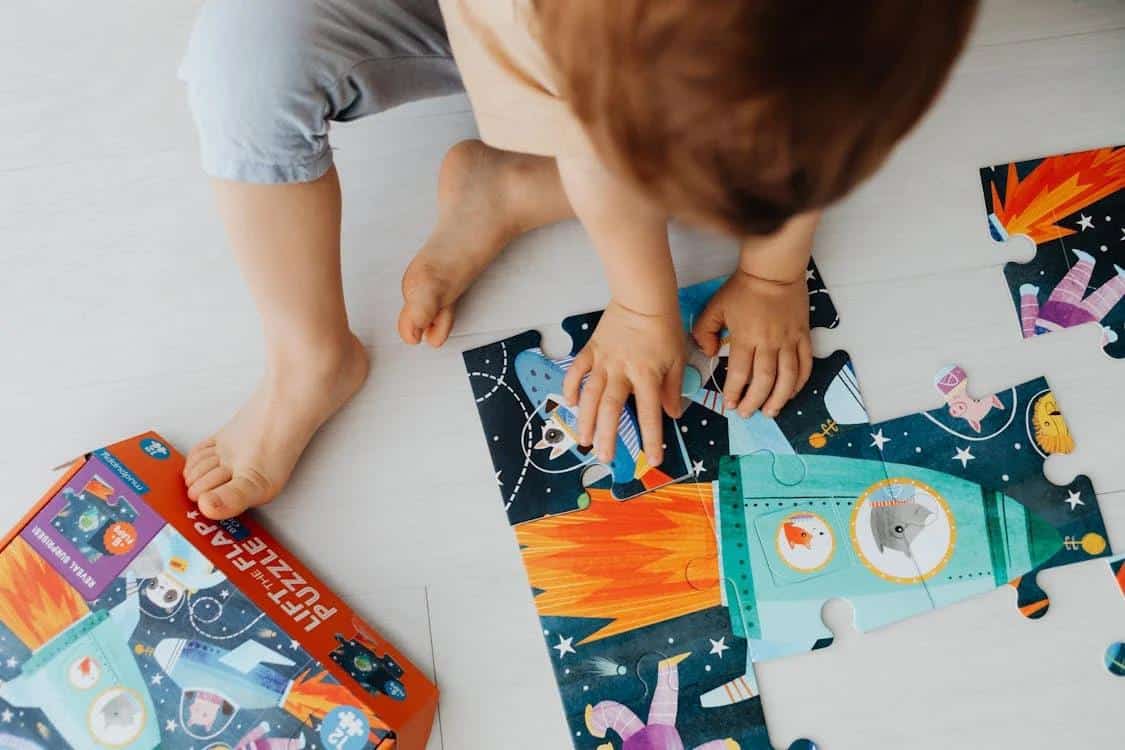
Photo from Pexels: A toddler completing a puzzle with his mum
Enhancing your child’s spatial awareness doesn’t require any expensive toys. With just a little creativity, you can turn everyday moments at home into fun and engaging opportunities for spatial learning and exploration.
Building Blocks and Construction Games
Educational toys like building blocks and construction sets are fantastic for developing spatial skills. They help children understand how objects fit together and how to position items for balance, symmetry and stability.
One great activity to try is creating 3D shapes using blocks. Simply provide a set of blocks and a picture or model to replicate. Encourage your child to observe, plan, and build and offer gentle guidance if they get stuck.
Puzzles and Pattern Matching
Puzzles and pattern matching are excellent spatial games you can easily try at home. These activities challenge your child to think about how pieces fit together and help them understand how a complete picture or pattern is formed from smaller parts.
Must-try activities:
- Jigsaw puzzleswith varying shapes and sizes to improve visual-spatial reasoning.
- Pattern recognition games, such as matching colours, shapes or sequences using cards or blocks.
These hands-on activities help strengthen problem-solving skills and visual perception.
Movement and Directional Games
Arts and crafts are a creative and hands-on way to build spatial awareness. By focusing on shapes, sizes, and positioning, children learn how different elements can be moved, rotated, and combined to create something new.
Must-try activities:
- Create abstract collagesby arranging and gluing various shapes onto a canvas or paper.
- Draw shapes and lines, or paint using brushes to explore how different forms fit and relate to each other.
These simple artistic tasks help children develop a deeper understanding of spatial relationships.
Arts and Crafts for Spatial Skills
Through arts and crafts, especially when you emphasise shapes and sizes, children learn how different forms can be moved, rotated, transformed and fitted together. These creative tasks help them visualise spatial relationships in a fun and hands-on way.
Must-try activities:
- Create abstract collagesby arranging various cut-out shapes into a design.
- Draw shapes and lines, and paint with brushesto explore size, placement and patterns.
Role of Technology in Developing Spatial Awareness
Technology can be a valuable tool in supporting child development milestones, including spatial awareness. Many educational apps, puzzles and games include interactive elements that encourage kids to practise real-world skills like matching shapes, recognising patterns, and understanding direction.
However, it’s important to use technology mindfully. Too much screen time can limit social interaction and reduce opportunities for hands-on exploration, both of which are essential for healthy development. Strive for a balanced approach, combining screen time with physical and social activities for the best overall growth.
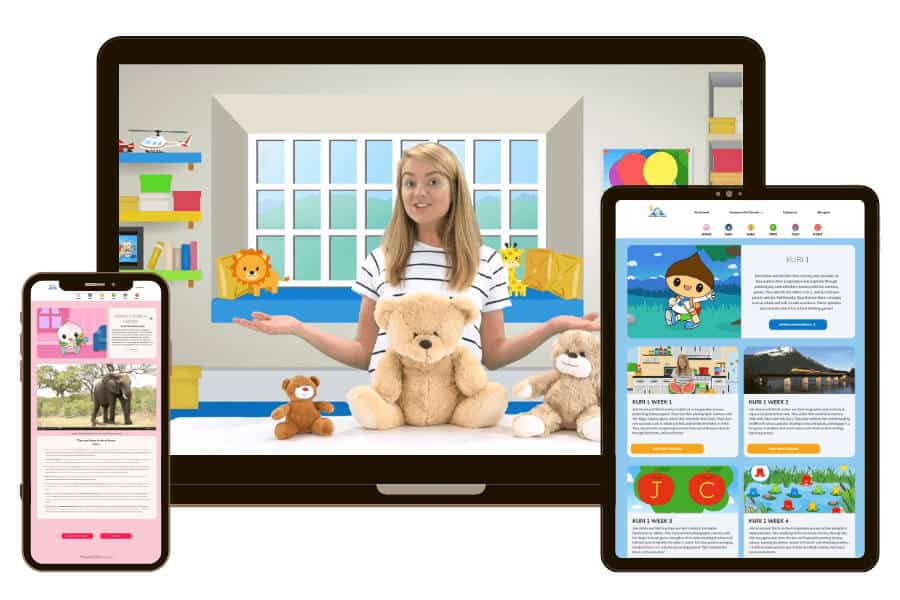
Photo by SHICHIDA at Home: Technology done right – these screen-based lessons are guided, interactive and grounded in real-world learning. SHICHIDA at Home helps children build spatial awareness, memory and fine motor skills from the comfort of home, with parent involvement at every step.
Recommended Educational Apps and Games
Here are some high-quality, age-appropriate apps that can support your child’s spatial reasoning and early development through play-based learning:
- SHICHIDA at Home (Ages 1–5): A whole-brain learning program designed to support early development, including spatial awareness, memory, and critical thinking, through fun, guided workbook activities, songs and interactive video lessons.
- DragonBox Numbers (Ages 4–9): Uses colourful visuals and interactive tools to help children understand abstract math and spatial concepts in a hands-on way.
- Lightbot (Ages 4–8): A puzzle game that introduces coding basics while building spatial reasoning through logic-based challenges and sequencing.
- Scratch Jr. (Ages 5–7): Encourages kids to create simple animations and storylines, teaching sequencing, cause and effect, and directional thinking.
Balancing Screen Time with Traditional Activities
As a parent, you can make the most of technology while still encouraging your child to enjoy traditional, hands-on activities that support spatial reasoning. Here are some practical tips to find that balance:
- Use technology intentionally – not every spatial game needs to be digital. Encourage physical play with puzzles, block sets and real-world movement.
- Choose digital content that educate, not just entertain. Look for tools that support learning goals like spatial awareness, not just screen time fillers.
- Set screen time limits to ensure a healthy mix of physical, social, and cognitive development.
- Stay involved. Sit with your child during screen time to talk about what they’re seeing and doing. Ask questions, join in, and make it an interactive experience – not just passive screen-watching.
A balanced approach helps your child benefit from both digital learning tools and the real-world experiences that are essential for spatial growth.
Long-Term Benefits of Strong Spatial Awareness
Spatial awareness goes far beyond simple games or childhood activities. It plays a key role in your child’s overall development, influencing everything from early learning to future academic success and career readiness.
The ability to understand space, distance, and relationships helps children with mathematics, problem-solving, and even creative pursuits like design or engineering. Beyond academics, spatial intelligence supports everyday life skills, from packing a school bag to navigating new environments with confidence.
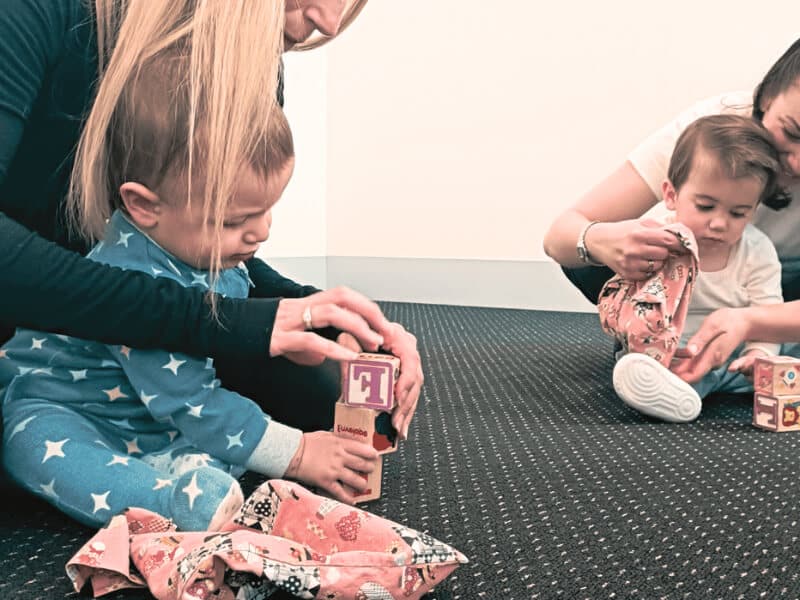
Photo by Shichida Australia: Spatial skills start early – here babies are stacking blocks which builds focus, balance and awareness of how objects fit in space.
Support your child’s growth with Shichida Australia. Spatial awareness is a key part of our holistic early learning approach – designed to nurture memory, creativity, critical thinking, and confidence from a young age.
Every class includes 20 to 25 engaging games and activities, offering fun, age-appropriate challenges for babies, toddlers and preschoolers.
Book a trial class today and see how we make learning a joyful and meaningful journey for your child!
FAQs
Spatial awareness is the ability to understand your position in space and how objects relate to one another. It plays a vital role in everyday life – especially for children – as they learn to move through their environment, complete tasks, and interact with others.
Spatial awareness begins to develop from birth. By around 18 months, children typically start to show an understanding of basic spatial concepts, like recognising shapes, pictures, and simple object placement.
Signs may include frequent bumping into objects or people, difficulty with puzzles or spatial games and trouble following directions related to space (like “under the table”). If concerns persist, consider seeking support from a healthcare professional or therapist.
Yes! Spatial awareness can be improved with regular, targeted activities. Simple games like pattern matching, arts and crafts, obstacle courses, and building block play can all make a difference – even at home.
Some of the best toys for developing spatial awareness include building blocks, jigsaw puzzles, construction sets and board games that involve movement, shape sorting or visual planning.