
Critical Thinking Games for Kids: A Comprehensive Guide
Watching your child struggle to solve a puzzle or make sense of a story you’ve just read together can be tough – but these moments are golden. They’re actually powerful opportunities to nurture critical thinking skills.
By giving your child the space to explore, ask questions, and form their own ideas, you’re helping them learn how to assess situations and make thoughtful decisions. The more freedom they have to think independently, the better problem-solvers they become.
So, how can you make this learning process fun and engaging? Try incorporating critical thinking games for kids into your daily routine. These playful activities build essential life skills. Here’s a guide to help you get started.
Understanding Critical Thinking in Children
Critical thinking for children goes beyond passive thinking – it’s a skill that enables them to assess situations, reason logically, and make sound decisions. By encouraging critical thinking early on, you’re setting the foundation for their success in school, interpersonal relationships and everyday life.
What is Critical Thinking
Critical thinking is not about memorising information. It’s about encouraging your child to ask questions like “why?” and “how?” It helps them learn to solve problems, recognise patterns, and make sense of information. Whether they’re dividing toys with a sibling or working through a tricky maths problem, these skills give them the confidence to approach challenges thoughtfully and independently.
Why Critical Thinking Skills Matter
When children are taught to think, they become problem-solvers, decision-makers, and creative thinkers. These skills not only support success in school, but best of all, it will serve them well as they navigate the complexities of life. Critical thinking can be enhanced at home through open-ended questioning, encouragement of curiosity, and playing enjoyable problem-solving games together.
Benefits of Critical Thinking Games
Children learn best when they’re having fun – which is exactly why critical thinking games for kids work so well as a learning tool. These activities actively engage kids and help strengthen their problem-solving and reasoning abilities. Learning through play allows children to apply critical thinking more easily in real-life situations. It also boosts their confidence and encourages greater independence as they grow.
Cognitive Development
Critical thinking activities for children encourage young minds to think deeply and plan ahead. Whether it is solving a puzzle, playing a logic game, or making decisions in a role-playing game, these kinds of activities strengthen memory, concentration, and problem-solving skills. The more your child practices critical thinking, the more confidently and efficiently they’ll be able to complete complex future tasks.
Social Skills Enhancement
Critical thinking games for kids also help establish social skills. Many educational games for kids teach cooperation, teamwork, and communication. Whenyour child works in a group to solve a problem, they practise sharing ideas, listening actively, and understanding different perspectives. These experiences help in establishing empathy, and prepare them to work well with others – both at home and at school.
Top Critical Thinking Games for Different Age Groups
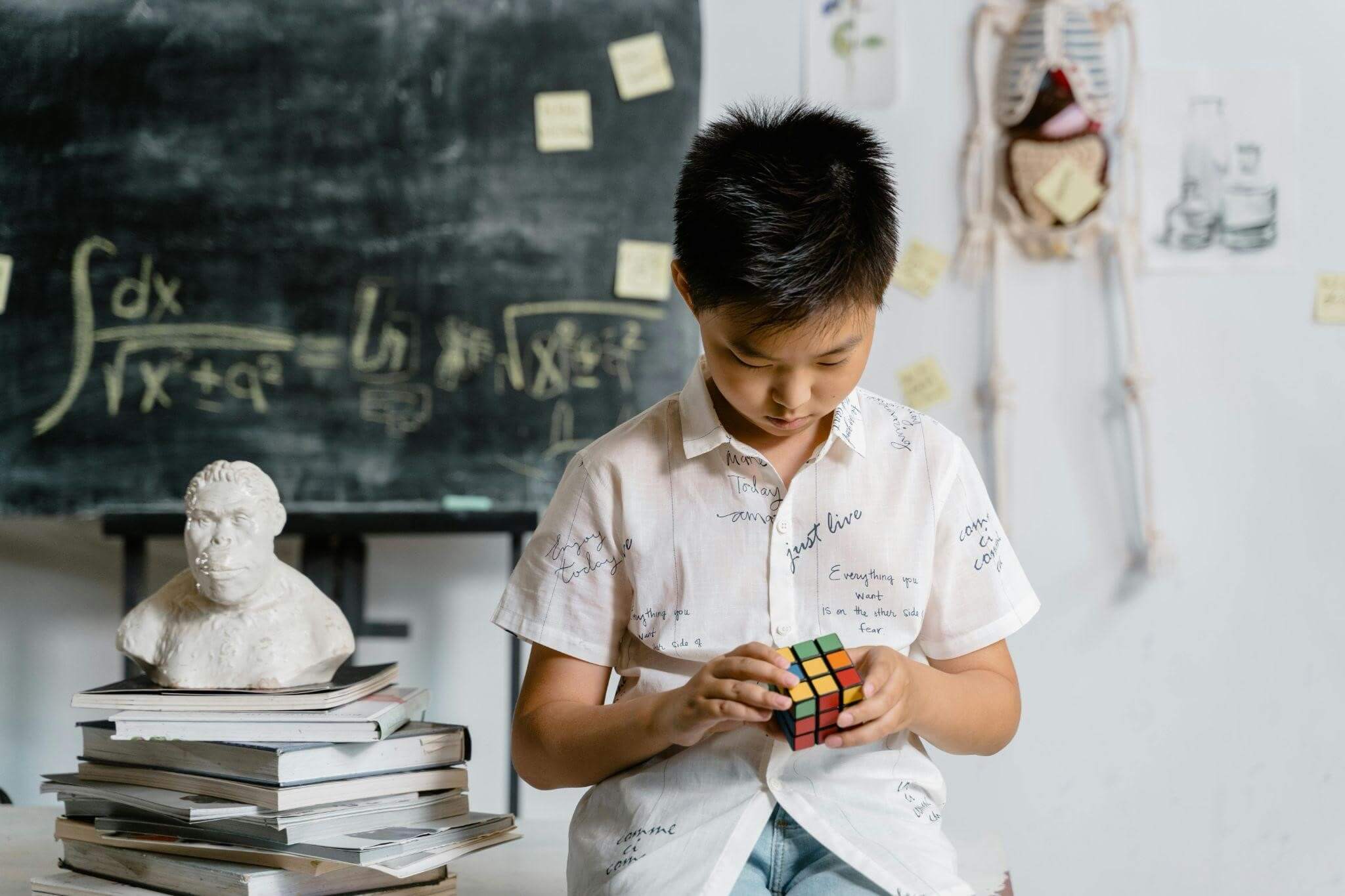
Photo from Pexels: Solving a Rubik’s Cube is one of the classic critical thinking games for kids, building logic, patience, and problem-solving skills.
Sometimes, all it takes is the right game to encourage critical thinking in your child. Whether they are a preschooler learning about patterns or a middle schooler tackling strategic challenges, critical thinking games for children make learning fun and engaging.
Here are some excellent critical thinking games for kids, grouped by age, to help build your child’s problem-solving and reasoning skills.
Babies (Ages 6–12 Months)
Critical thinking starts early. Even before they can talk, babies are already beginning to think critically by exploring their environment and learning how things work.
Peekaboo: Teaches object permanence and anticipation, forming the basis of early problem-solving.
Cause-and-Effect Toys: Toys with buttons, levers, or pop-ups help babies learn that actions lead to outcomes.
Sensory Exploration: Activities involving different textures, sounds, or contrasting visuals boost curiosity and build attention span.
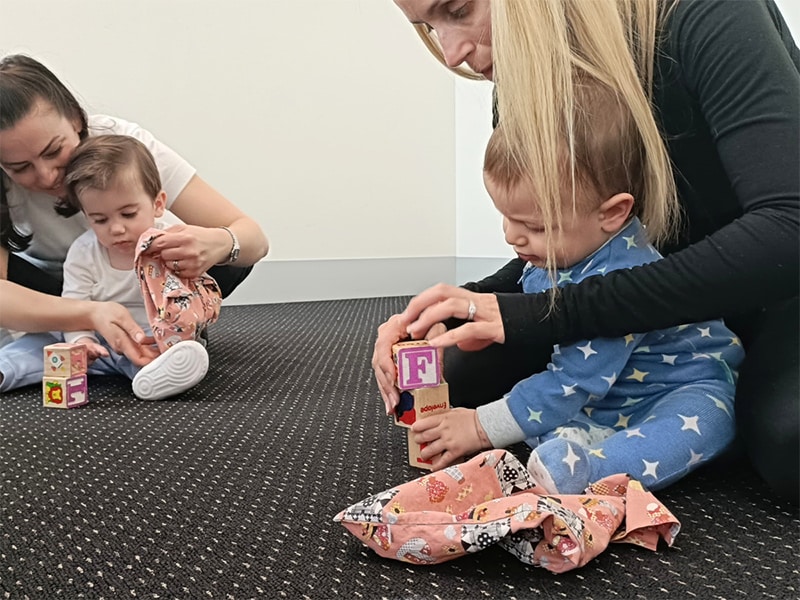
Photo by Shichida Australia: Babies stacking blocks with their mums during class – one of the earliest critical thinking games for kids that also supports coordination and problem-solving.
Toddlers (Ages 1–3 Years)
Toddlers are constantly experimenting, testing boundaries, and discovering how to solve simple problems through hands-on play.
Stacking and Nesting Toys: Help develop planning, hand-eye coordination, and spatial reasoning.
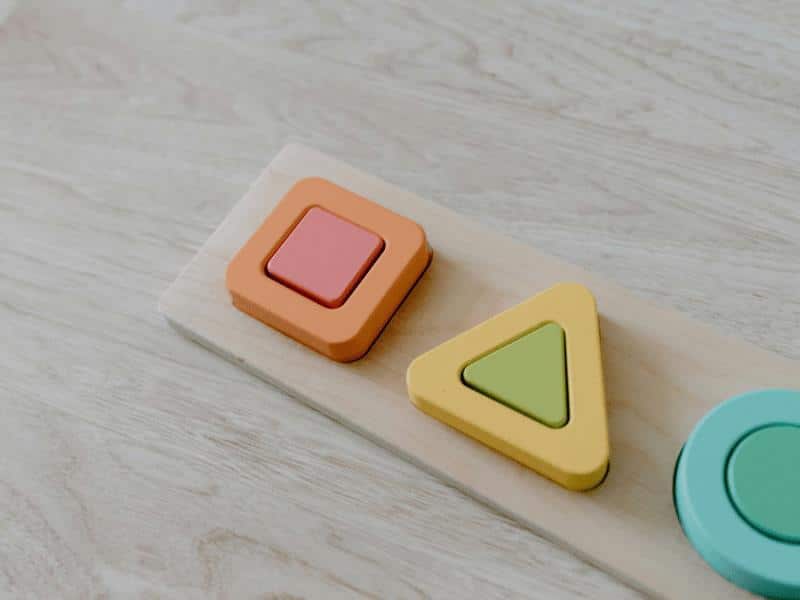
Shape Sorters and Knob Puzzles: Encourage problem-solving, fine motor skills, and visual matching.
Pretend Play: Role-playing with toy kitchens, animals, or dolls supports decision-making, empathy, and creativity.
Preschoolers (Ages 3-5)
Preschoolers are best taught at this stage through play. Simple critical thinking activities for children can help them recognise patterns, build memory, and build problem-solving skills.
Matching Games: Picture or letter matching games help preschoolers strengthen memory and observation skills.
Sorting and Categorising: Sorting games by colour, shape, or size supports early reasoning and comparison skills.
Early Primary (Ages 6-8)
At this stage, children begin to understand cause and effect and can engage in more structured problem-solving games.
Board Games (e.g., Guess Who?): Encourages logical thinking through the process of elimination.
Maze Play: A popular activity at Shichida Australia Centres, where children analyse paths, plan moves, and think ahead.
3D Tangram: Also used in Shichida classes, this hands-on puzzle supports spatial awareness and critical thinking.
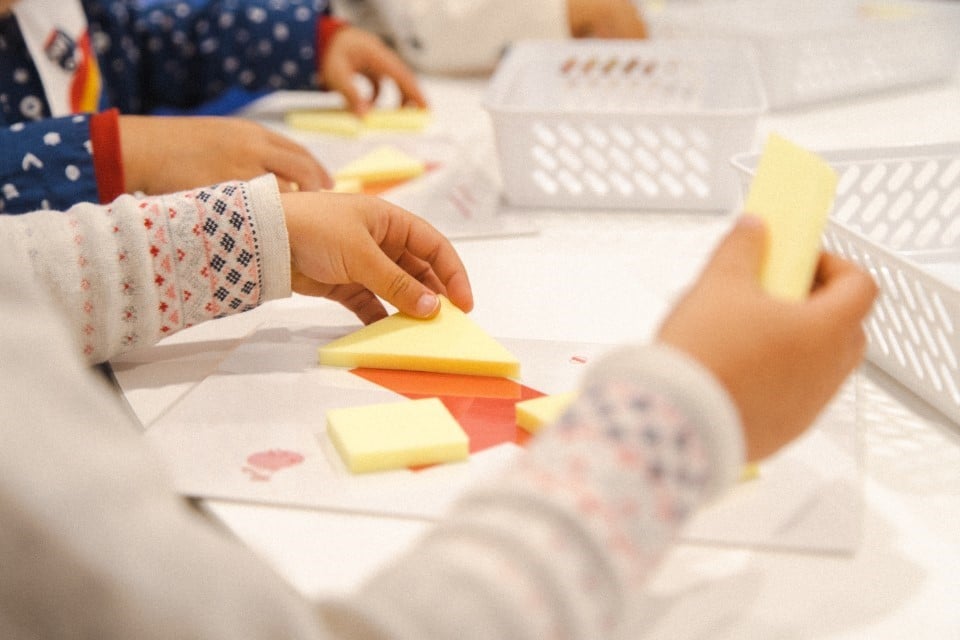
Photo by Shichida Australia: Solving 3D tangram puzzles are fun critical thinking games for kids, encouraging spatial awareness, logic, and perseverance.
Upper Primary (Ages 9-11)
Older children are ready for more complex critical thinking games for kids that involve planning, analysis and collaboration.
Chess: Enhances logical reasoning and strategic planning.
Escape Room Puzzles: Encourages teamwork and innovative thinking to solve time-bound challenges.
Rubik’s Cube: Encourages problem-solving, spatial reasoning, and perseverance.
DIY Critical Thinking Activities
You don’t need expensive tools or gadgetsl to help your child develop critical thinking skills. Everyday activities can improve their ability to analyse, evaluate, and solve problems. These critical thinking games for children can be done at home and are perfect for encouraging learning through play.
Everyday Problem-Solving Scenarios
One of the easiest ways to create problem-solving games for kids is by giving them real-life challenges to figure out. These simple, hands-on activities help develop critical thinking, creativity, and resilience:
“What’s the Best Way?” Challenge: Ask your child how they would transport a stack of books, pack a suitcase, or store toys in a space-saving way.. Let them try different methods and explain their thinking.
“Fix It” Game: Provide them with a broken toy, knotted necklace, or a puzzle with missing pieces and ask how they’d fix it. This promotes patience and innovative problem-solving.
DIY Escape Room: Set up a mini obstacle course or create a box with hidden clues and challenge your child to unlock it. It’s one of the most exciting problem-solving games for kids, encouraging logic, sequencing, and persistence through play.
Creative Storytelling
Storytelling develops logical reasoning, imagination, and communication skills – all vital for critical thinking. Here’s how you can make it enjoyable:
Story Starters Jar: Write down prompts like “I find a wallet while taking a walk” or “The cat suddenly starts talking!” and encourage your child to create a story. Let them decide what happens next, ask questions to expand their ideas, and help them connect ideas logically.
Mixed-Up Endings: Read a familiar story but stop before the ending.. Challenge your child to create a new ending for it. This encourages creativity and helps them practise sequencing and cause-and-effect thinking.
Draw and Tell: Ask your child to draw a random scene, then develop a story around it. Encourage them to describe what’s happening, who’s involved, and why – helping them link visual details with storytelling structure.
Integrating Critical Thinking into Daily Life

Photo from Pexels: Everyday moments like planning meals together can become powerful critical thinking games for kids – encouraging decision-making, sorting, and problem-solving as a family.
Helping your child build critical thinking skills doesn’t require a complicated setup. Simple changes to your everyday routines can go a long way.By making small changes in your daily interactions, you can encourage thinking and problem-solving naturally.
Asking Open-Ended Questions
Practice asking questions that encourage more than just a yes or no answer. Try these to start deeper conversations:
Instead of: “Did you enjoy school today?”
Ask: “What was the most interesting thing you learned today?”
You can also ask these questions: “What would happen if…?”, “Why do you think that occurred?” (Encourages explanation and reasoning.)
Encouraging Reflection
Encouraging children to think about their decisions and thoughts makes critical thinking exercises for children more effective in everyday life. Here are ways you can include reflection in everyday conversation:
After a game or activity: “What was your strategy? Would you do it differently another time?”
After a disagreement or conflict: “How did that make you feel? What might have made things go better?”
When making decisions: Have them think about their decision by asking, “Why did you choose that?”
Conclusion
Encouraging critical thinking games for kids helps them become confident problem-solvers, decision-makers, and creative thinkers. Through fun and engaging critical thinking activities for children, like storytelling, puzzles, and board games, they develop cognitive and social skills essential for real-life challenges.
Games to develop problem-solving skills promote strategic thinking, logical reasoning, and teamwork. Parents can further reinforce these skills by asking open-ended questions, encouraging reflection, and integrating problem-solving into daily life.
By making learning interactive and enjoyable, children naturally build critical thinking abilities that benefit them at school, home, and beyond.
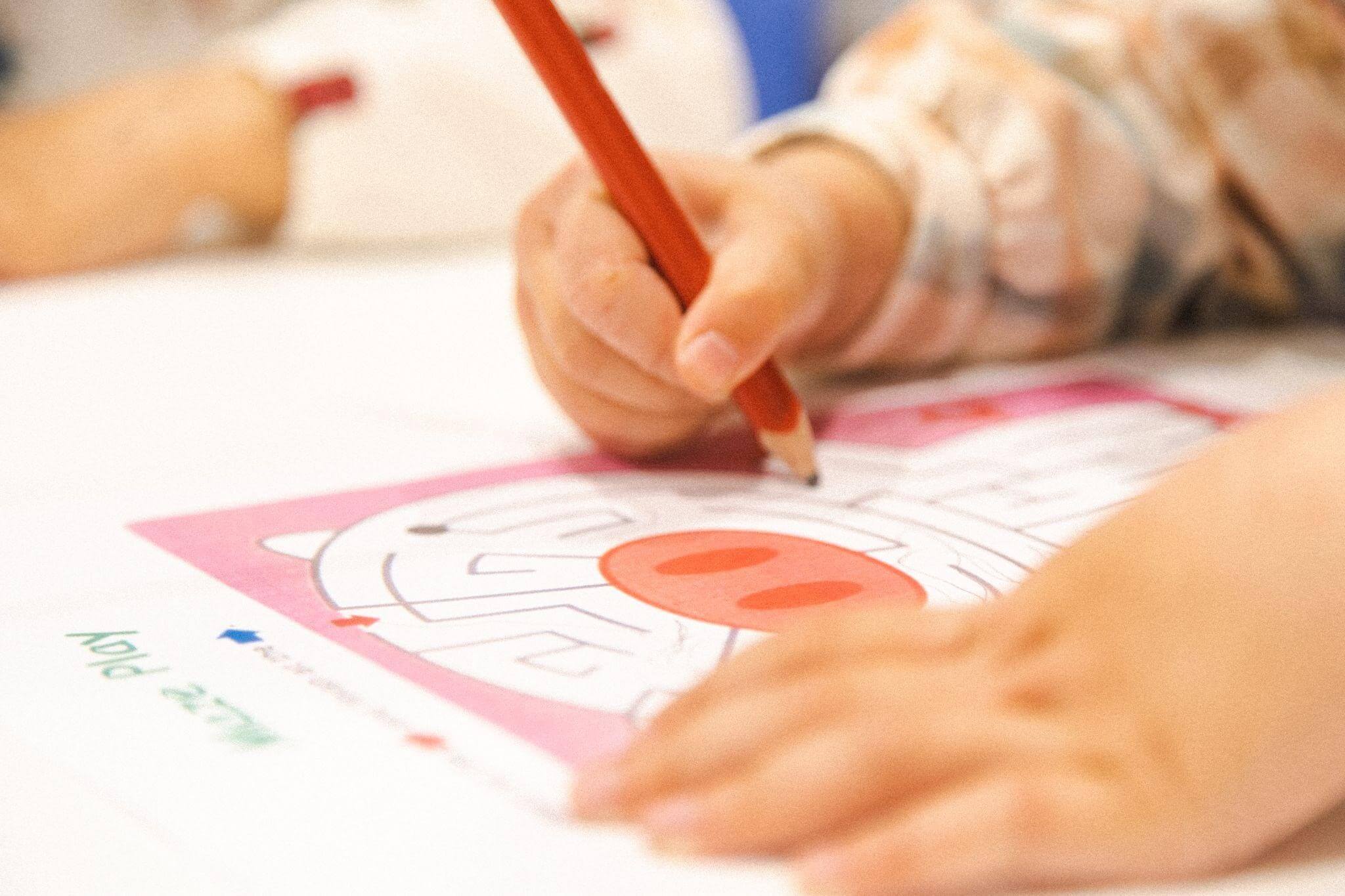
Photo by Shichida Australia: Completing a maze is one of the most effective critical thinking games for kids, helping preschoolers develop focus, logic, and perseverance.
Shichida Australia offers structured critical thinking games for kids – for children from 6 months to 9 years old. Our fun, interactive program develops intuition, memory, problem-solving and analytical skills. Explore our collection of critical thinking activities in our shop or book a trial class to see your child flourish in their thinking skills, all while having fun!
FAQs
Critical thinking skills help children analyse information, solve problems, and make logical decisions. These include reasoning, evaluating perspectives, and thinking creatively.
At what age should I start developing my child’s critical thinking skills?
Yes! They enhance problem-solving, reasoning, and comprehension, making learning in subjects like math, science, and reading more effective
Yes! Online learning platforms like SHICHIDA at Home and Reading Eggs offer interactive critical thinking activities for children to develop problem-solving skills.
Ask open-ended questions, discuss different solutions to everyday problems, and encourage independent decision-making through daily tasks.